Stop treating your soda fountain like a high school chemistry project gone wrong. If you are still pouring store-bought, corn-syrup-laden sludge into your carbonated water, you are committing a culinary felony. We are here to talk about the aggressive, high-velocity transition from Hot Infusion to Soda, a process that demands respect for thermodynamic stability and volatile oil sequestration. When you subject botanicals like ginger, lemongrass, or citrus zest to a controlled thermal spike, you aren't just making tea; you are fracturing cell walls to liberate essential oils that would otherwise remain dormant. The goal is a syrup so viscous and piquant that it demands to be diluted by a pressurized stream of CO2. We are capturing the fleeting ghost of a flavor and trapping it in a sugar matrix before it can evaporate into the kitchen exhaust. This is about precision, speed, and the ruthless pursuit of a beverage that bites back. Let us tear down your amateur assumptions and rebuild your liquid infrastructure from the atom up.
THE DATA MATRIX
| Metric | Specification |
|---|---|
| Prep Time | 15 Minutes |
| Execution Time | 25 Minutes |
| Yield | 750ml / 25.4 oz |
| Complexity (1-10) | 6 |
| Estimated Cost per Serving | $0.22 |
THE GATHERS
Ingredient Protocol:
- 500g / 2.25 cups Refined Granulated Sugar
- 500ml / 2 cups Filtered Deionized Water
- 100g / 4 oz Fresh Ginger Root (Microplaned)
- 15g / 3 tbsp Dried Hibiscus Calyx
- 5g / 1 tsp Citric Acid Powder
- 2g / 0.5 tsp Sea Salt
Section A: Ingredient Quality Audit:
If your ginger feels like a wet sponge or looks shriveled; abort the mission. Sub-par aromatics lead to a "dusty" flavor profile that no amount of sugar can mask. If you find yourself with woody, fibrous ginger, increase your surface area by using a high-speed blender instead of a grater to render the solids into a slurry. If your sugar has clumped due to humidity, do not just toss it in; sift it to ensure a rapid, even dissolve. Using tap water with high mineral content will cloud your syrup and interfere with the Hot Infusion to Soda clarity. Always use filtered water to ensure the piquant notes of your botanicals are the only thing hitting the palate.
THE MASTERCLASS
1. Thermal Activation of the Saucier
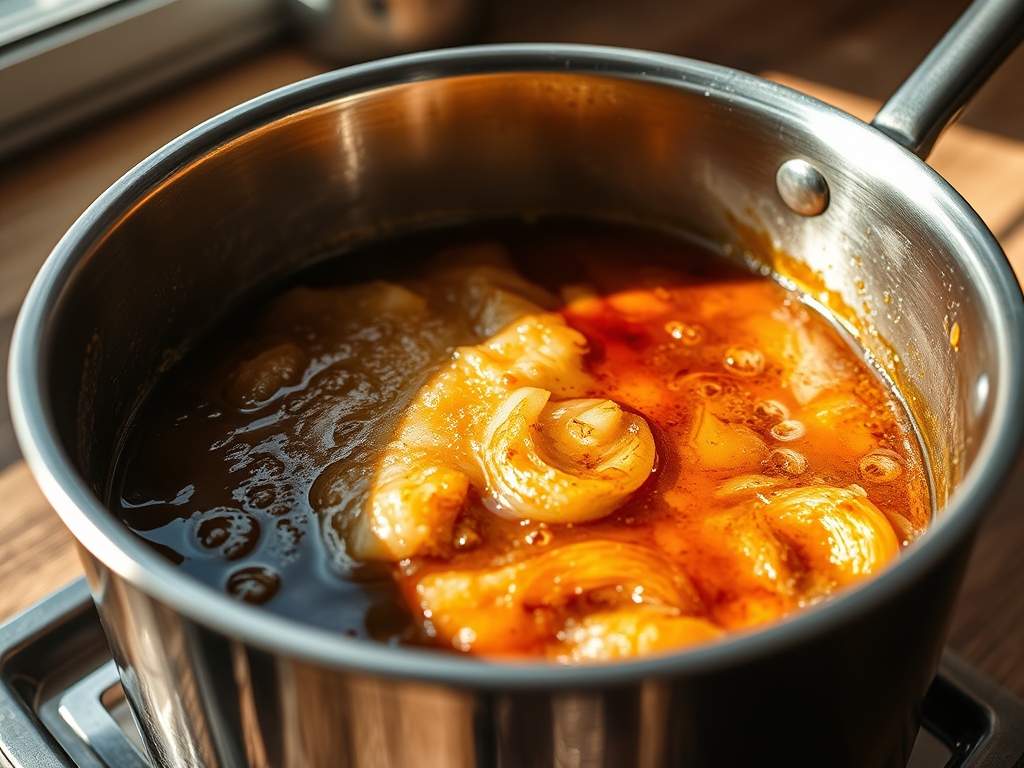
Place your heavy-bottomed saucier over medium-high heat. Add your filtered water and bring it to a precise 95 degrees Celsius (203 degrees Fahrenheit). Do not let it reach a rolling boil yet; we want to avoid excessive evaporation which throws off our sugar-to-water ratio.
Pro Tip: Use a calibrated digital thermometer to monitor the climb. A saucier is superior to a standard saucepan because its curved walls prevent sugar crystals from getting trapped in "dead zones" at the bottom corners.
2. The Saturation Phase
Slowly rain your granulated sugar into the water while whisking constantly. You are aiming for a fully saturated solution. Once the liquid is clear and the sugar is fully dissolved, you have created your base matrix.
Pro Tip: Using a digital scale for your sugar weight is non-negotiable. Volume measurements fluctuate based on how tightly the sugar is packed; weight is the only path to consistency in Hot Infusion to Soda chemistry.
3. Volatile Oil Liberation
Dump your microplaned ginger and hibiscus into the syrup. Immediately reduce the heat to a simmer. You will see the liquid transform into a deep, vibrant crimson as the anthocyanins in the hibiscus bleed out. The heat is currently breaking down the ginger's gingerol into shogaol, increasing the "kick."
Pro Tip: Cover the pot with a tight-fitting lid. This traps the steam and forces the volatile oils back down into the syrup rather than letting them escape into the room.
4. The Acid Trip
Once the infusion has simmered for ten minutes, remove it from the heat. Whisk in your citric acid and sea salt. The acid acts as a flavor brightener and a preservative, while the salt functions as a bridge between the sugar and the spice.
Pro Tip: Citric acid provides a "clean" sourness that mimics citrus without the bitterness of cooked juice. Use a bench scraper to clean your workstation of any stray ginger fibers during this downtime.
5. Cryogenic Stabilization
Strain the mixture through a fine-mesh chinois into a stainless steel bowl set over an ice bath. Rapid cooling is essential to "lock in" the flavor profile and prevent the syrup from continuing to cook and becoming overly jammy or caramelized.
Pro Tip: The faster you drop the temperature, the smaller the sugar crystal formation will be if the syrup sits in the fridge, ensuring a smooth, viscous pour every time.
Section B: Prep & Timing Fault-Lines:
The most common failure in the Hot Infusion to Soda workflow is the "over-steep." If you leave your aromatics in the hot syrup for too long as it cools naturally, you will extract bitter tannins and woody notes that ruin the finish. You must be surgical with your timing. If you miss your window and the syrup becomes too thick to pour, do not just add water. Re-heat it gently with a splash of simple syrup to maintain the brix level (sugar content) while restoring fluidity.
THE VISUAL SPECTRUM
Section C: Thermal & Visual Troubleshooting:
Referencing the Masterclass photo, your final syrup should possess a luminous, jewel-toned clarity. If your syrup looks "muddy" or opaque, you likely squeezed the solids too hard during the straining process, forcing pectin and cell debris into the liquid. If the color is dull rather than vibrant red, your hibiscus was likely old or your water was too alkaline. To fix a dull color, a tiny pinch more of citric acid can often "reset" the pH and bring back the brilliance. If you see crystals forming on the surface after chilling, your sugar wasn't fully dissolved before the infusion began; you'll need to gently re-warm the batch to re-incorporate those solids.
THE DEEP DIVE
Macro Nutrition Profile:
Per 30ml (1 oz) serving, expect approximately 60 calories, all derived from carbohydrates (15g sugar). There is negligible fat or protein. The ginger provides trace amounts of potassium, but this is a flavor vehicle, not a meal replacement.
Dietary Swaps:
- Vegan: This recipe is naturally vegan.
- Keto: Replace granulated sugar with an Allulose and Monkfruit blend. Note that the viscosity will be lower; you may need 1/4 teaspoon of xanthan gum to mimic the "mouthfeel" of real sugar.
- GF: Naturally gluten-free.
Meal Prep & Reheating Science:
This syrup is a molecular fortress. Because of the high sugar concentration and the addition of citric acid, it will stay shelf-stable in the refrigerator for up to four weeks. If the syrup thickens too much in the cold, do not microwave the whole bottle. Pour what you need and let it reach room temperature to restore its viscous flow. Never boil the finished syrup a second time; you will destroy the delicate aromatic compounds you worked so hard to sequester.
THE KITCHEN TABLE
Why is my soda flat even with the syrup?
The syrup must be chilled. Warm syrup releases CO2 rapidly, causing the soda to foam and go flat. Always combine fridge-cold syrup with ice-cold carbonated water to maintain maximum bubble retention and "bite."
Can I use honey instead of sugar?
Yes, but honey has its own powerful flavor profile that may compete with the ginger. If using honey, do not boil it. Dissolve it in 80 degree Celsius water to preserve its enzymes and delicate floral notes.
Why does my ginger syrup taste "soapy"?
This usually happens if you use old ginger or include too much of the peel. Always use a spoon to scrape the skin off fresh ginger before grating to ensure a clean, sharp, and piquant heat.
What is the best ratio for the final drink?
Start with a 1:5 ratio (one part syrup to five parts soda water). Adjust based on your preference for intensity. Professional setups often use a 1:6 ratio for a more refreshing, sessionable beverage.