The kitchen is not a sanctuary; it is a high-pressure laboratory where heat, time, and chemistry collide to transform fibrous muscle into silk. When we discuss Red Wine Beef Stew, we are not talking about a quaint grandmotherly hobby. We are discussing the structural engineering of protein fibers and the precision management of tannin-driven acidity. You are looking for more than a meal. You are seeking a suspension of collagen in a dark, viscous liquid that coats the tongue and demands respect. To achieve this, you must master the Maillard reaction, manage the evaporation rate of ethanol, and ensure the emulsification of fats into a glossy, piquant lacquer. This is an audit of your culinary infrastructure. If your beef is gray and your sauce is thin, your systems have failed. We are here to recalibrate your process, from the cellular breakdown of the chuck roast to the final aromatic infusion of fresh thyme. Prepare to engage with the most rigorous version of this classic dish ever documented.
THE DATA MATRIX
| Metric | Specification |
|---|---|
| Prep Time | 45 Minutes |
| Execution Time | 3.5 Hours |
| Yield | 6 Servings |
| Complexity | 7/10 |
| Estimated Cost per Serving | $6.50 – $8.50 |
THE GATHERS
Ingredient Protocol:
- 1.4 kg / 3 lbs Beef Chuck Roast, cubed into 5cm pieces.
- 750 ml / 1 bottle Dry Red Wine (Cabernet or Pinot Noir).
- 500 ml / 2 cups Beef Bone Broth, low sodium.
- 200 g / 7 oz Pancetta or Thick-Cut Bacon, diced.
- 450 g / 1 lb Pearl Onions, peeled.
- 450 g / 1 lb Cremini Mushrooms, quartered.
- 300 g / 3 large Carrots, cut into thick rounds.
- 30 g / 2 tbsp Tomato Paste, double concentrated.
- 45 g / 3 tbsp All-Purpose Flour.
- 4 cloves Garlic, smashed.
- 1 bundle Bouquet Garni (Thyme, Rosemary, Bay Leaf).
- 60 ml / 4 tbsp Unsalted Butter.
Section A: Ingredient Quality Audit:
If your beef looks pale or wet, it has been pumped with saline. This excess moisture will steam the meat instead of searing it. Remedy: Salt the beef 24 hours in advance and leave it uncovered in the fridge to desiccate the surface. If your wine is "cooking wine," discard it immediately. The high salt content and low-grade tannins will ruin the equilibrium. Use a wine you would actually drink. If your mushrooms are slimy, they are past their prime; sear them in a separate pan at high heat to drive off moisture before adding them to the stew to prevent a muddy texture.
THE MASTERCLASS
1. The Lipid Extraction
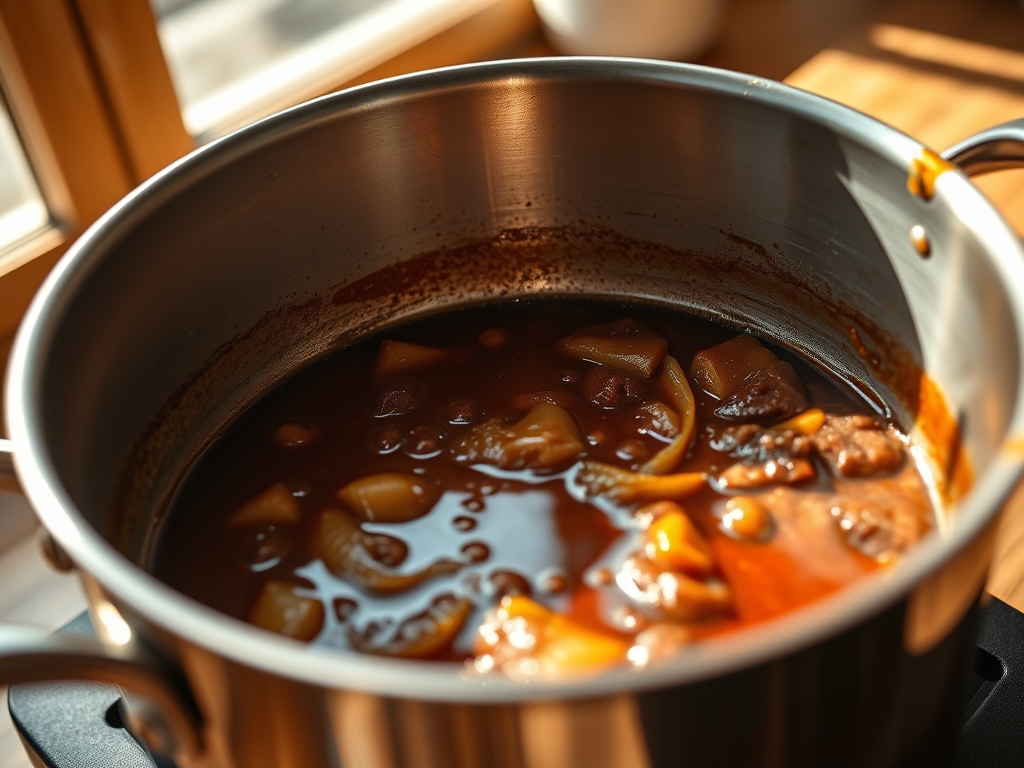
Begin by placing your diced pancetta into a cold heavy-bottomed Dutch oven. Bring the heat to medium and allow the fat to render slowly until the bits are golden and crisp. Remove the solids with a slotted spoon, leaving the liquid gold behind.
Pro Tip: Starting with a cold pan allows the fat cells to rupture before the exterior of the protein burns. Use a digital scale to ensure your fat-to-meat ratio is precise; you need enough lipid to fry, not just lubricate.
2. The Maillard Threshold
Pat your beef cubes bone-dry with paper towels. Increase the heat to medium-high. Working in batches, sear the beef in the rendered fat until a deep, dark brown crust forms on all sides. Do not crowd the pan.
Pro Tip: This is the Maillard reaction, a chemical reorganization of amino acids and sugars. If the pan temperature drops, the meat will boil in its own juices. Use an infrared thermometer to ensure the pan surface remains above 200C (400F).
3. The Aromatic Foundation
Remove the beef. Add the carrots and pearl onions to the residual fat. Sauté until the onions are translucent. Stir in the tomato paste and cook for 2 minutes until it turns a rusty brick color. Sprinkle the flour over the vegetables and stir constantly for 60 seconds.
Pro Tip: Cooking the tomato paste (pincé) removes its raw metallic edge and deepens the umami profile. Use a silicone spatula to ensure no paste sticks to the corners and burns.
4. The Deglaze and Integration
Pour in the red wine while using a bench scraper or wooden spoon to aggressively deglaze the bottom of the pot, lifting every charred bit (the fond). Return the beef and pancetta to the pot. Add the bone broth and the bouquet garni.
Pro Tip: The fond contains the concentrated essence of the seared beef. Alcohol is a powerful solvent that releases these flavor compounds. Ensure you scrape every millimeter of the pan floor.
5. The Low-Slow Transformation
Bring the liquid to a simmer, then cover with a tight-fitting lid. Transfer to a 150C (300F) oven for 2.5 to 3 hours. In the final 30 minutes, sauté the mushrooms in butter in a separate saucier and fold them into the stew.
Pro Tip: A Dutch oven provides superior thermal mass, maintaining a steady temperature that gently breaks down collagen into gelatin without toughening the muscle fibers.
Section B: Prep & Timing Fault-Lines:
The most common failure is the "rushed boil." If you boil the stew on the stovetop instead of simmering it in the oven, the protein fibers will contract and become rubbery. If your sauce is too thin at the end of the 3-hour mark, do not keep cooking the meat. Remove the beef and vegetables, then reduce the liquid on the stovetop until it reaches the desired viscous consistency before recombining.
THE VISUAL SPECTRUM
Section C: Thermal & Visual Troubleshooting:
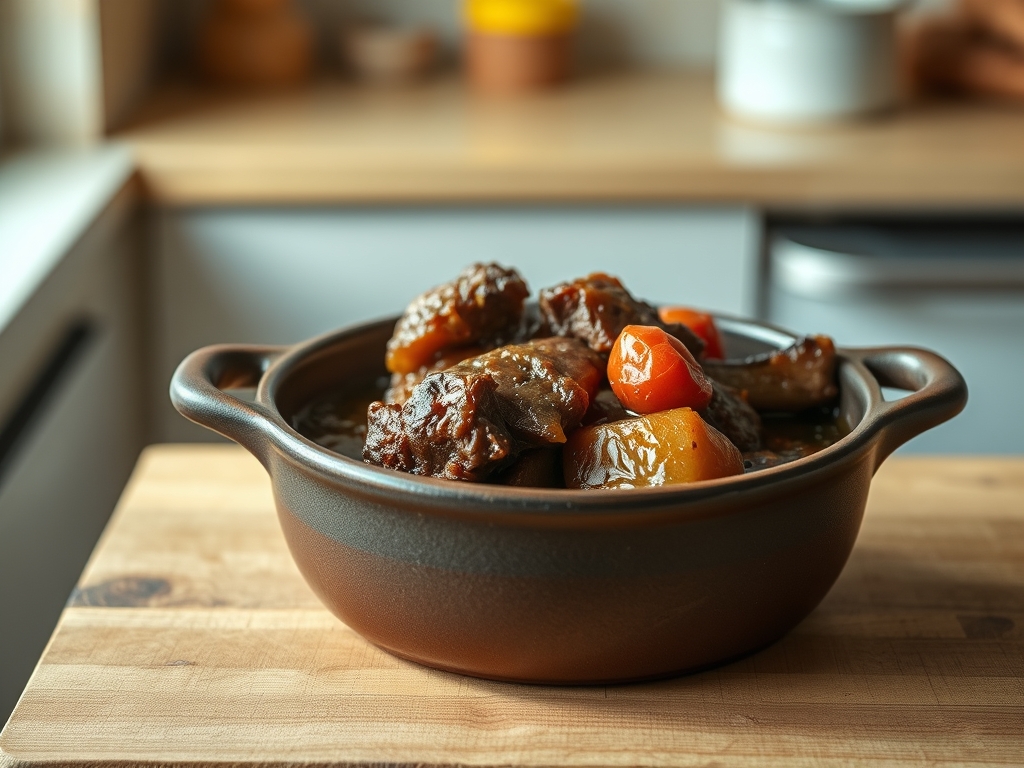
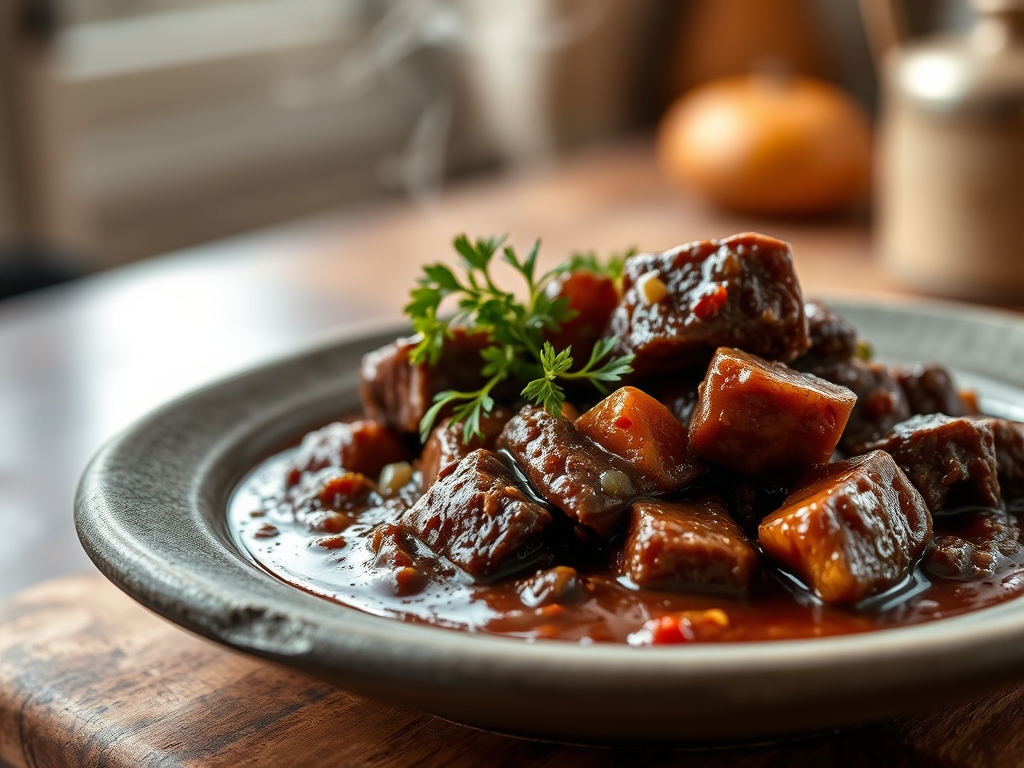
Observe the photo above. Notice the "high-gloss" finish on the sauce. This indicates a successful emulsification of gelatin and fat. If your stew looks "broken" or oily, you have too much fat and not enough binder; whisk in a small knob of cold butter (monter au beurre) at the very end to pull it back together. If the carrots look mushy, they were cut too small. Aim for 2cm discs to ensure they survive the three-hour thermal assault. The deep mahogany color is a direct result of a proper sear and the reduction of the red wine; if your stew is purple, you did not cook the wine down sufficiently before adding the broth.
THE DEEP DIVE
Macro Nutrition Profile
A standard serving of this Red Wine Beef Stew provides approximately 450 calories, 35g of protein, 18g of fat, and 12g of carbohydrates. The high protein content is balanced by the micronutrients in the root vegetables, though the sodium content can be high depending on your choice of broth.
Dietary Swaps
- Vegan: Replace beef with "meaty" king oyster mushrooms and use a vegetable demi-glace. Replace pancetta with smoked sun-dried tomatoes.
- Keto: Omit the flour and carrots. Use xanthan gum (sparingly) to thicken and increase the mushroom count.
- Gluten-Free: Swap all-purpose flour for a 1:1 gluten-free flour blend or a cornstarch slurry added at the end.
Meal Prep & Reheating Science
This dish is molecularly superior on day two. As the stew cools, the aromatics continue to infuse the protein, and the gelatin sets. When reheating, do so gently over low heat. Avoid the microwave, as it creates localized hot spots that can cause the beef to "pop" and lose its structural integrity. Add a splash of water or broth to loosen the sauce as it warms.
THE KITCHEN TABLE
Why is my beef still tough after three hours?
You likely used a lean cut like sirloin. Chuck roast requires the long, slow breakdown of connective tissue. If it is still tough, it simply needs more time at a low simmer to convert collagen into gelatin.
Can I make this in a slow cooker?
Yes, but you must sear the meat and sauté the aromatics in a pan first. If you dump raw ingredients into a slow cooker, you miss the Maillard reaction, resulting in a flat, one-dimensional flavor profile.
What is the best wine for this stew?
A dry, medium-to-full-bodied red like Cabernet Sauvignon, Merlot, or a French Burgundy. Avoid sweet wines or anything with heavy oak, as the flavors will concentrate and become overpowering during the reduction process.
My sauce is too salty, how do I fix it?
Do not add water, as it dilutes the flavor. Instead, add a splash of red wine vinegar or a squeeze of lemon. The acid will cut through the saltiness and balance the palate without thinning the texture.