Listen up, culinarians. We are not just making dinner; we are performing a high-stakes structural overhaul of a botanical vessel. Welcome to the Stuffed Peppers Audit. This is where the structural integrity of a bell pepper meets the chemical complexity of a meat and rice matrix. Most home cooks treat this dish like a garbage disposal for leftovers, but we are here to discuss the technical infrastructure of rice meat hybridization. Imagine the piquant aroma of roasting capsicum mingling with the savory depth of rendering fats. We are looking for that perfect Maillard reaction on the exterior and a moist, aerated core that does not collapse into a soggy mess. If your previous attempts have resulted in a watery, flavorless slush at the bottom of a glass dish, your infrastructure has failed. We are here to rebuild. We are here to ensure that every bite is a calibrated explosion of texture and heat. Strap in, grab your digital scale, and prepare to audit your process from the ground up.
THE DATA MATRIX
| Metric | Specification |
|---|---|
| Prep Time | 30 Minutes |
| Execution Time | 50 Minutes |
| Yield | 6 Servings |
| Complexity (1-10) | 4 |
| Estimated Cost per Serving | $3.50 |
THE GATHERS
Ingredient Protocol:
- 6 Large Bell Peppers (Red or Yellow preferred)
- 500g / 1.1 lbs Ground Beef (80/20 lean-to-fat ratio)
- 200g / 1 cup Long-grain White Rice (Parboiled)
- 400ml / 1.7 cups Tomato Coulis or Puree
- 150g / 1.5 cups Shredded Mozzarella
- 15ml / 1 tbsp Extra Virgin Olive Oil
- 5g / 1 tsp Smoked Paprika
- 2 Large Cloves Garlic (Microplaned)
- 1 Small Yellow Onion (Finely brunoised)
- 5ml / 1 tsp Worcestershire Sauce
Section A: Ingredient Quality Audit:
The primary failure point in this audit is often the rice hydration. If you use raw rice, it will rob the meat of its moisture; if you use overcooked rice, the interior becomes a gummy paste. Use parboiled rice to ensure it maintains its individual grain structure within the meat matrix. Regarding the peppers, look for specimens with four distinct lobes at the base. This provides a stable tripod for the vessel to stand upright during the thermal phase. If your beef is too lean, the filling will be dry and crumbly. If it is too fatty, the pepper will sit in a pool of rendered grease. An 80/20 ratio is the gold standard for maintaining a viscous and juicy interior.
THE MASTERCLASS
1. Vessel Preparation and Blanching
Clean the peppers and remove the tops. Use a paring knife to excise the internal ribs and seeds without puncturing the exterior wall. Submerge the empty vessels in boiling salted water for 3 minutes, then immediately shock them in an ice bath.
Pro Tip: This pre-cook step ensures the pepper is fully tender by the time the internal meat reaches safety. Use a saucier or a deep stockpot to ensure even heat distribution during the blanching phase.
2. The Aromatics and Fat Rendering
In a wide skillet, heat the olive oil and add the onions and garlic. Sauté until translucent but not browned. Add the ground beef and use a bench scraper or stiff spatula to break the protein into uniform crumbles. Cook only until the pink color vanishes.
Pro Tip: Do not fully brown the meat here. You want to save the final render for inside the pepper to allow the juices to infuse the rice grains.
3. Hybridization of the Filling
In a large mixing bowl, combine the partially cooked beef, parboiled rice, half of the tomato coulis, paprika, and Worcestershire sauce. Use your hands or a large spoon to fold the ingredients together until the mixture is homogenous but still aerated.
Pro Tip: Use a digital scale to ensure your rice-to-meat ratio is precise. Over-mixing will lead to a dense, "meatloaf" texture rather than a light, fluffy hybrid filling.
4. Cavity Filling and Structural Loading
Pack the filling into the blanched peppers. Do not compress the mixture too tightly; the rice needs room to expand as it absorbs the remaining liquid. Top each pepper with the remaining tomato coulis and a generous layer of mozzarella.
Pro Tip: Use a spoon to create a small well in the center of the filling before adding the sauce. This allows the liquid to penetrate the core of the pepper during the bake.
5. Thermal Execution
Place the peppers in a baking dish and add 125ml of water to the bottom of the pan. Cover tightly with foil and bake at 190C / 375F for 30 minutes. Remove the foil and bake for an additional 15 minutes to brown the cheese.
Pro Tip: The steam trapped by the foil ensures the rice finishes hydrating. Use an instant-read thermometer to verify an internal temperature of 71C / 160F for food safety.
Section B: Prep & Timing Fault-Lines:
The most common human error is the "Cold Start" mistake. If your filling is refrigerator-cold when it enters the oven, the pepper exterior will overcook and collapse before the center reaches the target temperature. Ensure your filling is at room temperature or slightly warm from the skillet before loading the vessels. Furthermore, skipping the foil-covered phase will lead to "Rice Shrapnel," which are hard, unhydrated grains at the top of the filling that never received enough steam to soften.
THE VISUAL SPECTRUM
Section C: Thermal & Visual Troubleshooting:
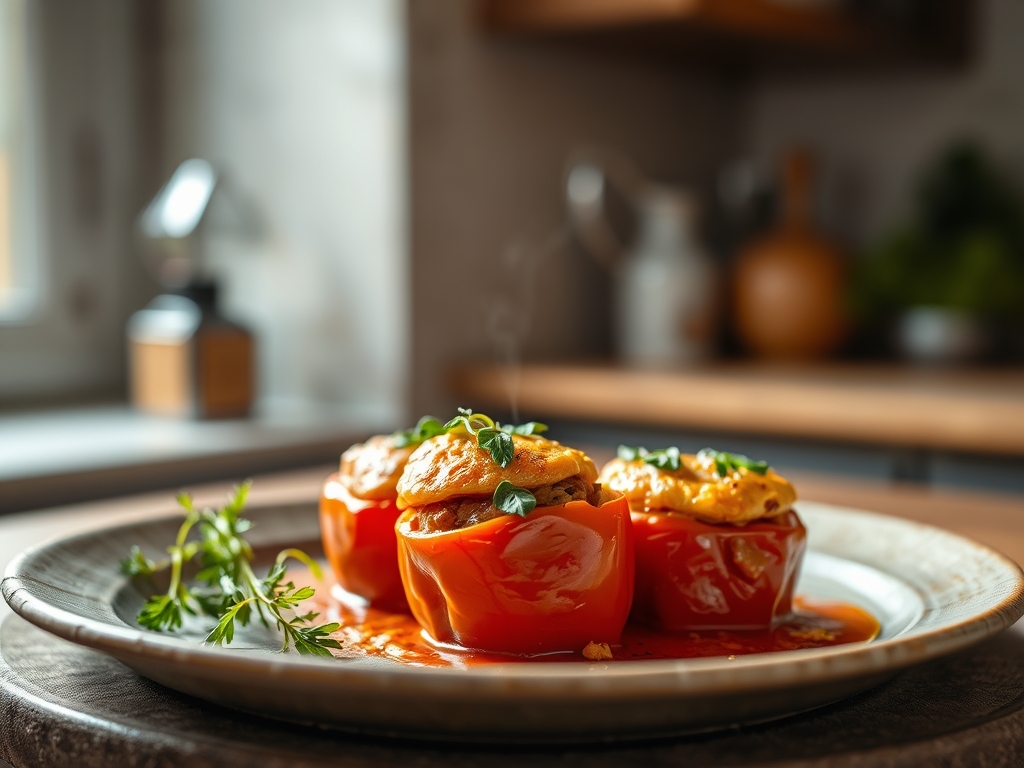
Referencing the Masterclass photo, you are looking for a vibrant pepper skin that is soft but not shriveled. If the skin is sloughing off, you have over-blanched or over-baked the vessel. The cheese on top should exhibit "leopard spotting," which are small, toasted brown circles indicating a successful Maillard reaction. If the sauce looks watery, you failed to deglaze your pan properly or used a sauce with too high a water content. The filling should hold its shape when sliced but should not appear as a solid, monolithic block. Individual grains of rice should be visible and glistening with rendered fat.
THE DEEP DIVE
Macro Nutrition Profile:
A single audited pepper typically contains 350 calories, 22g of protein, 28g of carbohydrates, and 18g of fat. The high vitamin C content from the bell pepper remains largely intact despite the thermal processing, provided you do not exceed the recommended bake time.
Dietary Swaps:
For a Vegan infrastructure, swap the beef for a mixture of lentils and finely chopped mushrooms; replace the cheese with a cashew-based nutritional yeast melt. For Keto, eliminate the rice and increase the vegetable content with riced cauliflower or extra diced peppers. For GF, ensure your Worcestershire sauce is a certified gluten-free brand.
Meal Prep & Reheating Science:
These peppers are structural marvels for meal prep. To reheat, use a microwave at 70% power to prevent the meat from becoming rubbery. The rice acts as a moisture reservoir, preventing the dish from drying out during the second thermal cycle.
THE KITCHEN TABLE
Why is there liquid at the bottom of my dish?
Peppers release water as their cellular structure breaks down. The pre-blanching step and the rice in the filling help absorb this, but a small amount of residual "pepper juice" is normal and serves as a flavorful jus.
Can I use brown rice instead?
Yes, but the infrastructure changes. Brown rice requires a much longer parboiling time (about 20 minutes) before being added to the meat, as it will not soften at the same rate as the beef during the final bake.
My peppers are falling over in the pan!
If your peppers are unstable, slice a tiny sliver off the bottom lobes to create a flat surface. Alternatively, use a muffin tin to hold individual peppers upright during the roasting process.
Can I freeze these for later?
Absolutely. Freeze them after the filling is loaded but before the final bake. To cook from frozen, add 20 minutes to the foil-covered baking phase to ensure the core reaches the proper thermal threshold.