Forget the pale, shelf-stable tubs of mystery grease found in the back aisles of the supermarket. We are entering the realm of liquid gold. If you want to achieve the ultimate Render to Set Tallow, you must view your kitchen not as a sanctuary of domesticity, but as a high-performance lipid purification lab. Tallow is the backbone of culinary history; it is the structural integrity behind the world's most shatteringly crisp fries and the secret to a crust that defies the laws of physics. We are taking raw, bovine suet and subjecting it to a thermal breakdown that separates the pure triglycerides from the cellular debris. This is a process of extreme patience and surgical precision. You are not just cooking; you are performing a phase transition. The goal is a product that is snow-white, odorless, and possesses a melting point that makes it the most stable frying medium in your arsenal. Prepare your senses for the heavy, primal scent of melting fat and the rewarding clarity of a perfectly refined yield.
THE DATA MATRIX
| Metric | Specification |
|---|---|
| Prep Time | 25 Minutes |
| Execution Time | 4 to 6 Hours |
| Yield | Approximately 950ml / 4 Cups |
| Complexity (1-10) | 4 |
| Estimated Cost per Serving | $0.15 |
THE GATHERS
Ingredient Protocol:
- 2.25 kg / 5 lbs High-Quality Beef Suet (Kidney fat is preferred for high-purity yield).
- 250 ml / 1 cup Filtered Water (To prevent scorching during the initial phase).
- 30 g / 2 tbsp Fine Sea Salt (To aid in the drawing out of impurities).
Section A: Ingredient Quality Audit:
The primary failure point in lipid purification is the quality of the raw suet. If your fat arrives with significant red muscle tissue or greyish discoloration, your final product will suffer from a "beefy" odor and a lower smoke point. Technical Fix: Use a sharp boning knife to aggressively trim away any non-fatty tissue. If the fat smells oxidized before you even begin, it is too late; the lipid peroxidation has already begun. Always source suet from grass-fed cattle if possible, as the fatty acid profile is significantly more stable and contains higher levels of conjugated linoleic acid.
THE MASTERCLASS
Step-by-Step Execution:
1. The Mechanical Breakdown
Begin by chilling your suet until it is nearly frozen. Use a digital scale to verify your starting weight. Pass the chilled fat through a meat grinder or pulse it in a heavy-duty food processor until it reaches the consistency of coarse gravel.
Pro Tip: Reducing the surface area is essential for an even render. Large chunks of fat will insulate their core, leading to uneven melting and potential scorching of the exterior before the interior liquefies.
2. The Hydration Buffer
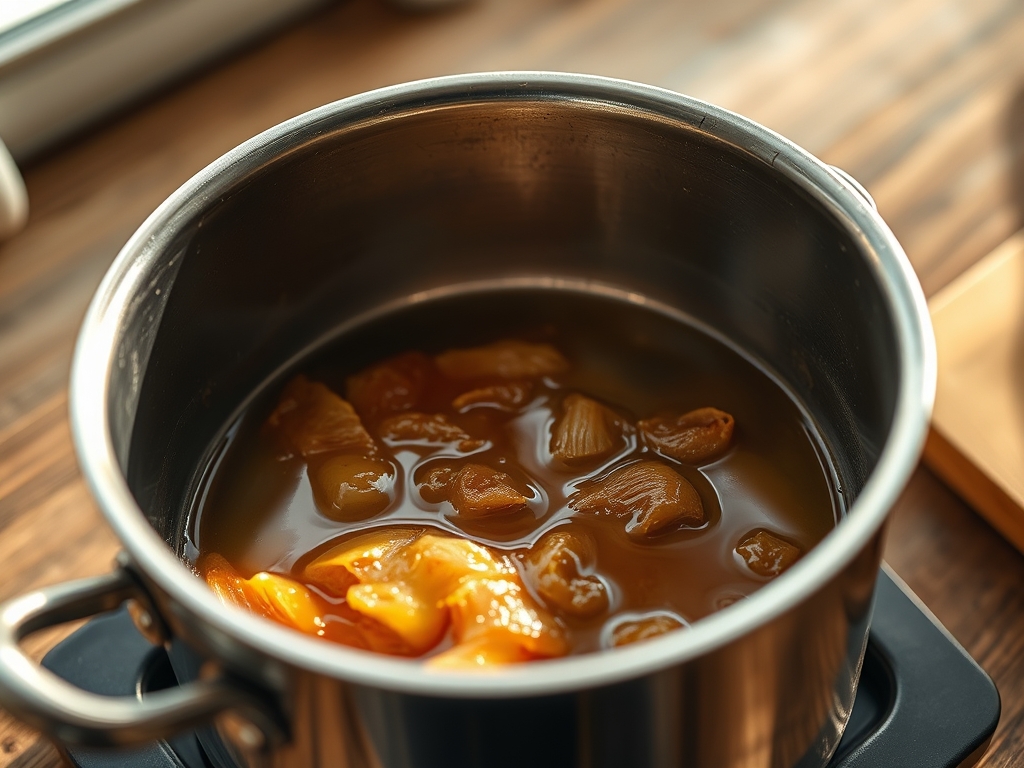
Place the processed fat into a heavy-bottomed saucier or Dutch oven. Add the filtered water and salt. Set your heat source to the lowest possible setting. The water acts as a thermal regulator, ensuring the fat does not exceed 100 degrees Celsius until the moisture has evaporated.
Pro Tip: This stage is about emulsification prevention. We want the water to carry away water-soluble proteins without integrating into the fat molecules themselves.
3. The Thermal Extraction
Maintain a very low simmer. You will observe the mixture turning from an opaque white slurry into a translucent liquid. Use a bench scraper or heat-resistant spatula to occasionally stir the bottom, ensuring no solids stick to the floor of the vessel.
Pro Tip: Monitor the temperature with an infrared thermometer. You are aiming for a steady 105 to 110 degrees Celsius. This temperature is high enough to drive off residual moisture but low enough to prevent the Maillard reaction from darkening the oil.
4. The Sediment Filtration
Once the "cracklings" (the leftover connective tissue) have turned a light golden brown and sunk to the bottom, the process is nearly complete. Set up a fine-mesh strainer lined with a double layer of cheesecloth or a coffee filter over a heat-safe glass bowl.
Pro Tip: This is the most critical stage for purity. Slow filtration ensures that even microscopic protein fragments are trapped, preventing your tallow from going rancid during storage.
5. The Final Set
Allow the liquid fat to cool at room temperature until it begins to look cloudy. At this point, you can transfer it to wide-mouth jars. Place them in the refrigerator to fully render to set tallow.
Pro Tip: Rapid cooling in the fridge after the initial ambient cool-down helps create a smaller crystalline structure in the fat, resulting in a smoother, creamier texture rather than a grainy one.
Section B: Prep & Timing Fault-Lines:
The most common human error is impatience. Increasing the heat to "speed up" the process will inevitably result in the burning of the small protein bits, which will infuse your tallow with a bitter, smoky flavor and a dark tan color. If you see white steam, you are on track; if you see blue-tinted smoke, your temperature is too high and you are compromising the molecular integrity of the lipids.
THE VISUAL SPECTRUM
Section C: Thermal & Visual Troubleshooting:
In the reference image, the tallow exhibits a pristine, ivory-white finish with a smooth, matte surface. This indicates a successful purification. If your tallow appears yellow, you likely used fat from an older animal or grass-finished beef (which is high in beta-carotene); this is acceptable. However, if the surface shows "pockmarks" or a grainy, crystalline texture, the cooling process was too slow. To fix this, you can gently re-melt the tallow and shock-cool it in an ice bath while stirring to aerate and normalize the crystal formation. If there is a layer of liquid at the bottom of your jar, you failed to evaporate all the water; this must be drained immediately to prevent bacterial growth.
THE DEEP DIVE
- Macro Nutrition Profile: Tallow is 100 percent lipid-based. Per 13g serving (1 tablespoon), you are looking at 115 calories, 13g total fat, 6g saturated fat, and 5g monounsaturated fat. It contains zero carbohydrates and zero protein.
- Dietary Swaps: While tallow is the gold standard for Keto and Paleo diets due to its stability, it is obviously not vegan. For a plant-based alternative with similar structural properties, refined coconut oil is the closest match, though it lacks the piquant depth of beef fat.
- Meal Prep & Reheating Science: Tallow is incredibly stable. It can be stored at room temperature for months or in the freezer for years. When reheating, avoid the microwave, which can cause localized "hot spots" that break down the fatty acids. Use a small saucepan to gently deglaze or melt the fat for use.
THE KITCHEN TABLE
Why is my tallow grainy instead of smooth?
Graininess occurs when the fat cools too slowly, allowing large fat crystals to form. To ensure a silky texture, let the tallow cool slightly on the counter, then move it to the refrigerator to accelerate the final setting process.
Can I reuse tallow after deep frying?
Yes, provided you did not exceed its smoke point (205°C / 400°F). After frying, filter the cooled tallow through a coffee filter to remove food particles. This maintains its purity and prevents the development of off-flavors during storage.
Is the salt necessary during the rendering process?
Salt is a chemical tool here. It helps pull moisture and impurities out of the fat cells, leading to a cleaner final product. It also acts as a mild preservative, though most of it will be filtered out with the sediment.
What is the difference between tallow and suet?
Suet is the raw, hard fat found around the kidneys and loins of cattle. Tallow is the result of the rendering process. You cannot cook with suet effectively; you must transform it into tallow to unlock its culinary potential.