Listen up, kitchen operatives. We are moving beyond the realm of domesticated, grain-fed mediocrity and entering the high-stakes theater of wild protein management. When you engage with a Braised Venison Stew, you are not just making dinner; you are conducting a thermal audit of lean muscle fibers that lack the safety net of marbled fat. Venison is the athlete of the forest. It is dense, iron-rich, and unforgiving to the amateur who treats it like a supermarket chuck roast. This dish demands a mastery of the Maillard reaction to build a flavor profile that is both rugged and refined. We are looking for a result that is deeply viscous, aromatically piquant, and structurally sound. If you miss your marks, you end up with metallic-tasting shoe leather. If you hit them, you achieve a level of protein saturation that renders all other stews obsolete. Prepare your stations. We are about to transform a lean, wild harvest into a masterpiece of culinary engineering through precise moisture control and aggressive searing.
THE DATA MATRIX
| Metric | Specification |
|---|---|
| Prep Time | 45 Minutes |
| Execution Time | 3.5 Hours |
| Yield | 6 Standard Units (Servings) |
| Complexity | 7/10 |
| Estimated Cost per Serving | $8.50 – $12.00 |
THE GATHERS
Ingredient Protocol:
- Protein: 1.4kg / 3lbs Venison shoulder or neck, cubed into 4cm blocks.
- Fat Source: 60ml / 4 tbsp Beef tallow or high-smoke point oil.
- Aromatic Base: 300g / 2 cups Yellow onion, small dice.
- Structure: 200g / 1.5 cups Carrots, thick coins.
- Structure: 200g / 1.5 cups Parsnips, thick coins.
- Liquid Phase A: 500ml / 2 cups Dry red wine (Cabernet or Syrah).
- Liquid Phase B: 750ml / 3 cups Fortified beef or game stock.
- Thickening Agent: 30g / 1/4 cup All-purpose flour.
- Flavor Amplifiers: 30g / 2 tbsp Tomato paste.
- Botanicals: 4 sprigs Fresh thyme; 2 dried Bay leaves.
- Acidity: 15ml / 1 tbsp Balsamic vinegar.
Section A: Ingredient Quality Audit:
If your venison arrives with a greyish hue or excessive silver skin, your final texture will fail the audit. Silver skin does not render like collagen; it contracts into rubber bands. Use a sharp boning knife to strip every millimeter of connective membrane before the first sear. If your stock is watery and lacks body, it will fail to create a viscous sauce. The fix is to infuse the stock with a gelatin sheet or a small amount of unflavored gelatin powder before it hits the pot. This provides the mouthfeel that lean wild game naturally lacks. Finally, if your wine is "cooking wine" from a grocery store shelf, discard it. Use a wine you would actually drink; the tannins are essential for breaking down the dense protein structures during the long braise.
THE MASTERCLASS
Step-by-Step Execution:
1. The Thermal Priming
Dry the venison cubes thoroughly using paper towels. Moisture is the enemy of the Maillard reaction. Season aggressively with salt and pepper using a digital scale to ensure a 1.5 percent salt-to-weight ratio. Heat your heavy-bottomed Dutch oven or saucier until the oil reaches the shimmering point.
Pro Tip: This is about thermodynamics. Overcrowding the pan drops the surface temperature, causing the meat to steam in its own juices rather than sear. Work in three small batches to ensure a dark, crusty exterior.
2. The Deglaze and Aromatic Integration
Remove the meat and set aside on a stainless steel prep tray. Add onions and carrots to the residual fat. Use a bench scraper to move the vegetables, picking up the "fond" or caramelized bits from the bottom of the pot. Once the onions are translucent, add tomato paste and cook for two minutes until it turns a rusty brick red.
Pro Tip: This stage is where you deglaze the vessel. The tomato paste acts as a bridge between the fat and the sugars in the vegetables, creating a complex flavor base that prevents the venison from tasting overly "gamey."
3. The Molecular Suspension
Dust the vegetables with flour and stir for sixty seconds to cook out the raw starch flavor. Slowly pour in the red wine while whisking or stirring constantly to aerate the mixture and prevent lumps. Return the venison and any accumulated juices to the pot.
Pro Tip: The flour must be fully incorporated into the fat before the liquid is added. This creates a stable emulsion that will keep the sauce from breaking during the three-hour simmer.
4. The Long-Form Braise
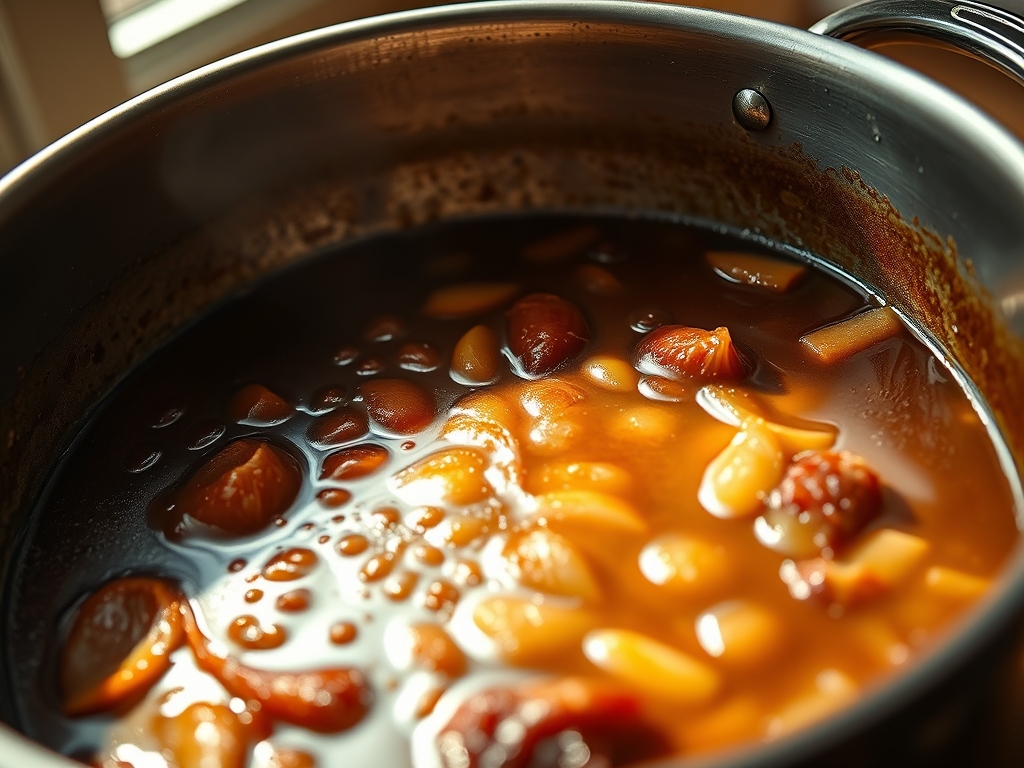
Add the stock, thyme, and bay leaves. Bring to a gentle simmer; do not allow a rolling boil. Cover with a tight-fitting lid and transfer to a 150C / 300F oven. This low and slow approach ensures the lean venison fibers relax without becoming stringy.
Pro Tip: Use a probe thermometer to check the internal temperature of the largest meat chunk. You are looking for 90C / 195F, which is the "sweet spot" where collagen has fully converted to gelatin but the muscle fibers haven't completely disintegrated.
5. The Final Acid Adjustment
Remove the pot from the oven. Discard the woody herb stems. Stir in the balsamic vinegar and a knob of cold butter to "mount" the sauce, giving it a professional sheen. Taste and adjust for salt.
Pro Tip: The balsamic vinegar provides a piquant finish that cuts through the heavy iron notes of the venison. It brightens the entire profile and balances the deep, earthy tones of the root vegetables.
Section B: Prep & Timing Fault-Lines:
The most common failure in a Braised Venison Stew is the "Boil of Death." If your liquid temperature exceeds 95C for an extended period, the meat will toughen and the sauce will become cloudy. If you find your stew is too thin at the end of the timer, do not keep boiling the meat. Remove the solids with a slotted spoon and reduce the liquid on high heat separately until it coats the back of a spoon. Another timing error is adding the parsnips too early; they have a higher sugar content than carrots and will turn to mush if subjected to the full three-hour braise. Add them at the halfway mark for perfect structural integrity.
THE VISUAL SPECTRUM
Section C: Thermal & Visual Troubleshooting:
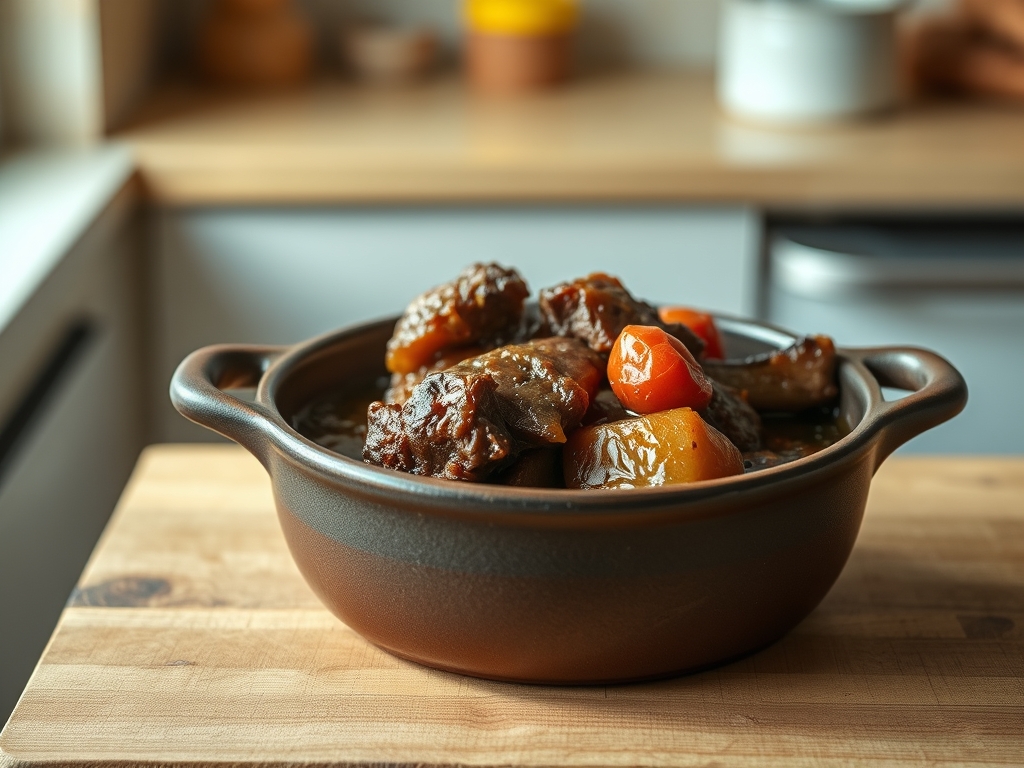
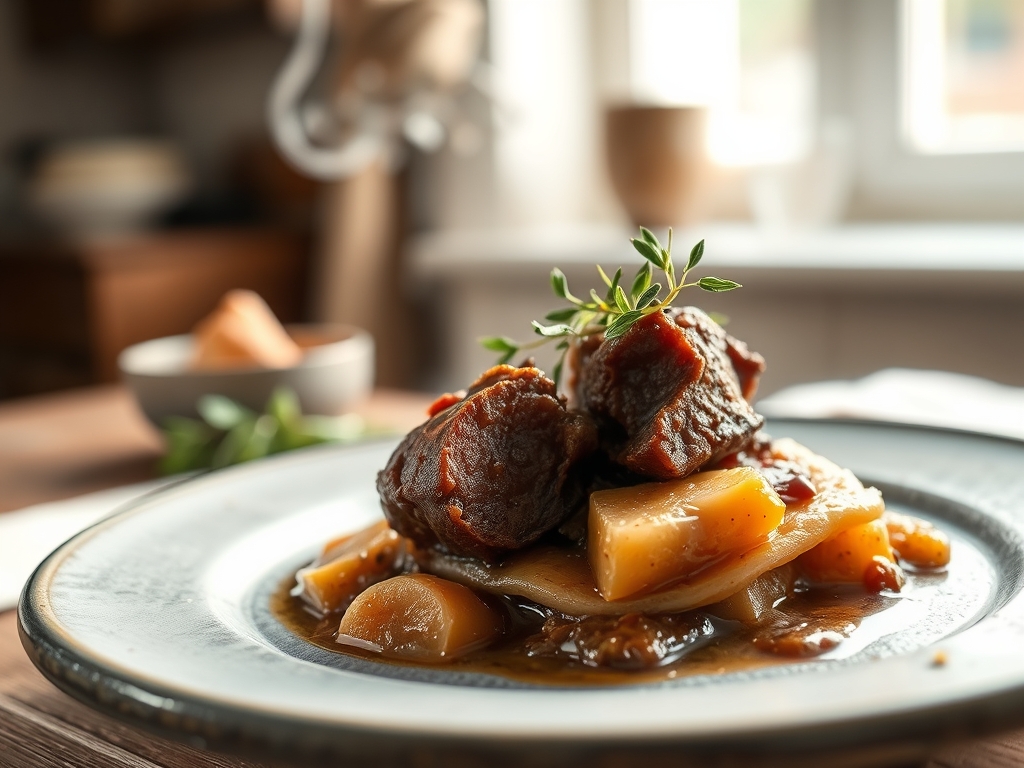
Look at the reference photo above. Notice the deep, mahogany color of the sauce. If your stew looks pale or tan, you failed to sear the meat long enough or neglected to brown the tomato paste. The vegetables should have distinct edges; if they look rounded or fuzzy, they are overcooked. The meat should glisten. A dull, matte finish on the venison indicates it has dried out; this usually happens if the lid wasn't tight enough and too much moisture escaped. If the sauce is broken (oil floating on top), use a high-speed immersion blender to emulsify a small portion of the liquid with a tablespoon of cold water, then stir it back into the main pot to restore the viscous texture.
THE DEEP DIVE
Macro Nutrition Profile:
A standard serving of this Braised Venison Stew contains approximately 350 calories. It is a powerhouse of nutrition, providing 45g of protein, 12g of fat, and 15g of carbohydrates. It is exceptionally high in Vitamin B12 and Heme Iron, making it the ultimate recovery meal for high-output individuals.
Dietary Swaps:
- Keto: Replace the flour with 1/2 teaspoon of Xanthan gum and omit the parsnips. Use extra celery for crunch.
- Vegan: This is a fundamental structural change. Replace venison with lion's mane mushrooms or thick-cut seitan. Use mushroom broth and add a dash of soy sauce for umami.
- Gluten-Free: Swap the all-purpose flour for a high-quality GF blend or use a cornstarch slurry at the very end of the process.
Meal Prep & Reheating Science:
Stew is famously better the next day because of flavor distribution. As the stew cools, the meat fibers contract and pull the seasoned sauce into the center of the cubes. To reheat, avoid the microwave, which causes localized "hot spots" that can turn the venison rubbery. Reheat gently on the stovetop over low heat, adding a splash of water or stock to loosen the gelatinized sauce.
THE KITCHEN TABLE
Why is my venison still tough after three hours?
You likely had the temperature too low or used a cut with too much connective tissue. Continue the braise in 20-minute increments. Venison eventually yields; it just requires a stubborn chef to match its stubborn fibers.
Can I use a slow cooker for this protocol?
Yes, but you must perform the searing and deglazing steps in a separate pan first. Simply dumping raw venison into a slow cooker results in a grey, flavorless mess that lacks the essential Maillard complexity.
What is the best side dish for this stew?
A high-starch delivery system is mandatory. Think garlic mashed potatoes, buttered egg noodles, or a thick slice of sourdough. You need a neutral base to soak up the viscous red wine reduction.
Is the wine absolutely necessary?
The acidity and tannins in the wine are functional tools for tenderizing wild game. If you must avoid alcohol, use a combination of beef stock and two tablespoons of pomegranate juice for a similar chemical effect.