Imagine a pressurized chamber where gluten strands stretch to their absolute limit under the relentless assault of steam. This is not a laboratory experiment; it is the fundamental reality of the calzone. When you fold a disc of fermented dough over a mountain of ricotta and cured meats, you are engineering a biological steam oven. This is Calzone Shell Logic. It is the art of balancing structural integrity against internal moisture migration. If your shell is too thin, the trapped humidity turns the base into a soggy, structural failure. If it is too thick, you end up chewing through a literal loaf of bread before reaching the prize. We are looking for that golden, shattered-glass exterior that yields to a molten, savory interior. The goal is a crust that acts as a high-pressure vessel, holding back a flood of piquant marinara and liquefied fats until the very moment your knife breaches the perimeter. We are here to audit your technique and upgrade your kitchen infrastructure from amateur hour to professional-grade execution.
THE DATA MATRIX
| Metric | Specification |
|---|---|
| Prep Time | 20 Minutes (plus 24-hour cold ferment) |
| Execution Time | 12 Minutes |
| Yield | 4 Large Calzones |
| Complexity (1-10) | 7 |
| Estimated Cost per Serving | $3.50 |
THE GATHERS
Ingredient Protocol:
- 500g / 3.75 cups "00" Flour (High protein for elasticity)
- 325ml / 1.3 cups Filtered Water (Room temperature)
- 10g / 2 tsp Fine Sea Salt
- 3g / 1 tsp Instant Dry Yeast
- 250g / 1 cup Whole Milk Ricotta (Drained)
- 200g / 1.5 cups Low-Moisture Mozzarella (Shredded)
- 100g / 0.75 cup Spicy Soppressata or Pepperoni
- 5ml / 1 tsp Extra Virgin Olive Oil (For the crust finish)
Section A: Ingredient Quality Audit:
The most common failure point in Calzone Shell Logic is the water content of your cheese. If you use "fresh" mozzarella packed in water, your calzone will suffer a catastrophic structural collapse as the cheese renders its moisture during the bake. Always opt for low-moisture mozzarella. If your ricotta appears viscous or runny, you must strain it through cheesecloth for at least two hours. For the dough, if your flour has a low protein content, the shell will lack the tensile strength required to contain the expanding steam. Audit your pantry; if it is not "00" or high-protein bread flour, do not proceed until you have the correct substrate.
THE MASTERCLASS
1. Hydration and Autolyse
Combine your flour and water in a large bowl and mix until a shaggy mass forms. Let this sit for twenty minutes. This allows the flour to fully hydrate before you introduce salt or yeast. Use a digital scale for this process; volumetric measurements are the enemy of consistency.
Pro Tip: This resting period allows the gluten to begin forming spontaneously, which reduces your total kneading time and prevents over-oxidation of the dough.
2. The Long Ferment
Incorporate your salt and yeast, then knead using a bench scraper to manage the sticky surface until the dough is smooth and passes the windowpane test. Place the dough in a sealed container and refrigerate for 24 to 48 hours.
Pro Tip: Cold fermentation allows enzymes to break down complex starches into simple sugars, which will infuse the crust with a deeper flavor and ensure superior browning via the Maillard reaction.
3. Structural Assembly
Divide the dough into four equal balls. On a floured surface, stretch each ball into a perfect circle. Place your fillings on one half, leaving a one-inch border. Fold the dough over and crimp the edges tightly.
Pro Tip: Use a bench scraper to lift the dough and ensure it is not sticking to the work surface before you add the fillings. A stuck calzone is a torn calzone.
4. The Steam Release
Before the calzone enters the oven, use a sharp knife to cut two small slits in the top of the shell. This is the "exhaust valve" of your pressure vessel.
Pro Tip: Without these vents, the internal steam pressure will force a breach at the weakest point of your seam, leading to a messy "blowout" on your baking stone.
5. The High-Heat Execution
Slide the calzones onto a preheated baking stone at 500 degrees Fahrenheit. Bake until the exterior is charred in spots and the internal temperature of the cheese reaches 160 degrees Fahrenheit.
Pro Tip: Use an infrared thermometer to verify your stone has reached the target temperature. A cold stone results in a "pale bottom" syndrome that ruins the Calzone Shell Logic.
Section B: Prep & Timing Fault-Lines:
The biggest human error is rushing the dough's return to room temperature. If you stretch cold dough, it will snap back, leading to a thick, uneven shell. Give your dough at least two hours on the counter before shaping. Furthermore, if you overload the interior with raw vegetables, they will release water during the bake, turning the inside into a soup. Always sauté or render the moisture out of vegetables in a saucier before they enter the dough envelope.
THE VISUAL SPECTRUM
Section C: Thermal & Visual Troubleshooting:
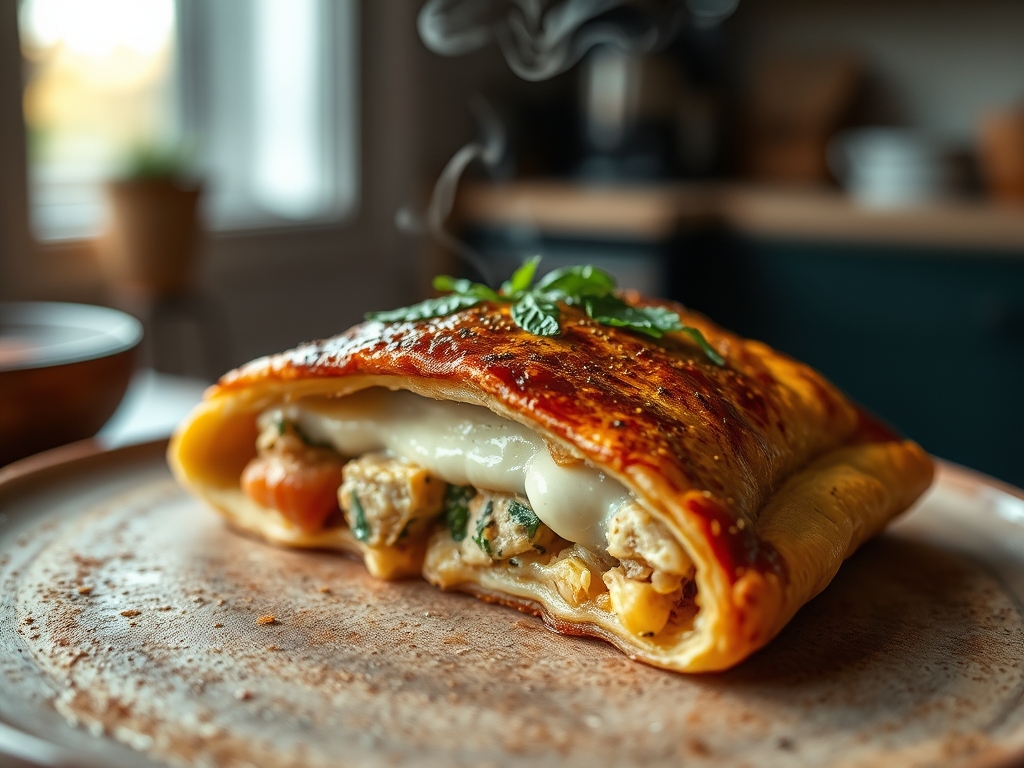
Referencing the Masterclass photo, you should see "leopard spotting" on the crust; these are small, charred bubbles that indicate a long fermentation and high-heat environment. If your crust is a uniform, dull tan, your oven temperature was too low or your dough was under-fermented. If the edges are leaking oil, your cheese-to-dough ratio is off, or your crimping technique lacks the necessary mechanical lock. A perfect calzone should look inflated and taut, like a leather football. If it looks deflated, your steam vents were too large, or the dough lacked the structural integrity to hold its shape.
THE DEEP DIVE
Macro Nutrition Profile:
A single serving typically contains 850 calories, 35g of protein, 90g of carbohydrates, and 40g of fat. It is a high-energy fuel source meant for recovery or heavy activity.
Dietary Swaps:
For a vegan variant, replace ricotta with a cashew-based cream and use a fermented tofu mozzarella. For Gluten-Free requirements, use a blend of cauliflower flour and xanthan gum, though be warned: the "stretch" required for Calzone Shell Logic is significantly diminished without wheat protein.
Meal Prep & Reheating Science:
To maintain the molecular structure when reheating, avoid the microwave at all costs. The microwave agitates water molecules, making the crust rubbery. Instead, use an air fryer or a toaster oven at 375 degrees Fahrenheit to re-crisp the exterior while gently melting the interior.
THE KITCHEN TABLE
Why is my calzone soggy on the bottom?
You likely placed it on a cold baking sheet or used high-moisture fillings. Use a preheated baking stone and ensure your ricotta is thoroughly drained to maintain the integrity of the bottom shell.
Can I use store-bought pizza dough?
You can, but it often lacks the protein strength for a calzone. If you do, let it sit at room temperature for two hours and dust it heavily with flour to handle the extra moisture.
How do I get that shiny, golden finish?
Brush the exterior with a light coating of extra virgin olive oil or an egg wash immediately before baking. This promotes even browning and adds a professional, viscous sheen to the finished product.
What is the best tool for sealing the edges?
While a fork works, the professional method is a "rope crimp" using your thumb and forefinger. This creates a mechanical seal that is far more resistant to the internal pressure of the steam.