Listen up, kitchen architects. We are not just making a sauce; we are executing a high-stakes engineering project that transforms scorched poultry sediment into liquid gold. The journey from Roaster to Gravy Boat is a masterclass in thermal extraction and lipid management. As the turkey exits the heat, the roasting pan becomes a battlefield of flavor. You have spent hours monitoring internal temperatures, but the real victory is hidden in that dark, caramelized debris clinging to the stainless steel. This is the fond. It is a concentrated matrix of Maillard reaction products and rendered fats that, if handled with precision, becomes the most viscous and piquant elixir in your culinary repertoire. We are talking about a structural transition from solid protein to a silky fluid emulsion. Forget those dusty packets of starch and salt. We are building an infrastructure of flavor that requires speed, heat control, and a total refusal to settle for watery, gray mediocrity. Grab your whisk; it is time to audit your gravy.
THE DATA MATRIX
| Metric | Specification |
|---|---|
| Prep Time | 10 Minutes |
| Execution Time | 20 Minutes |
| Yield | 1 Liter / 4 Cups |
| Complexity (1-10) | 4 |
| Estimated Cost per Serving | $0.45 |
THE GATHERS
Ingredient Protocol:
- Turkey Pan Drippings (Fat and Fond): 120ml / 0.5 cup
- All-Purpose Flour (The Binder): 60g / 0.5 cup
- High-Quality Turkey or Chicken Stock: 950ml / 4 cups
- Unsalted Butter (Optional Buffer): 30g / 2 tbsp
- Dry White Wine or Vermouth: 60ml / 0.25 cup
- Fresh Thyme and Sage: 5g / 1 tbsp minced
- Kosher Salt and Cracked Black Pepper: To Taste
Section A: Ingredient Quality Audit:
If your drippings are scorched and smell bitter, the carbonization has gone too far. Do not attempt to save them; the bitterness will permeate the entire batch. Instead, discard the blackened fat and start a fresh roux using unsalted butter while scraping only the non-burnt brown bits. If your stock is store-bought and lacks body, it likely lacks gelatin. Fix this by blooming 5g of unflavored gelatin in cold water and whisking it into the simmering sauce to simulate the mouthfeel of a long-simmered bone broth. Finally, if the fat appears "broken" or separated, your emulsion has failed due to a lack of agitation or improper ratios.
THE MASTERCLASS
Step 1: The Lipid Extraction
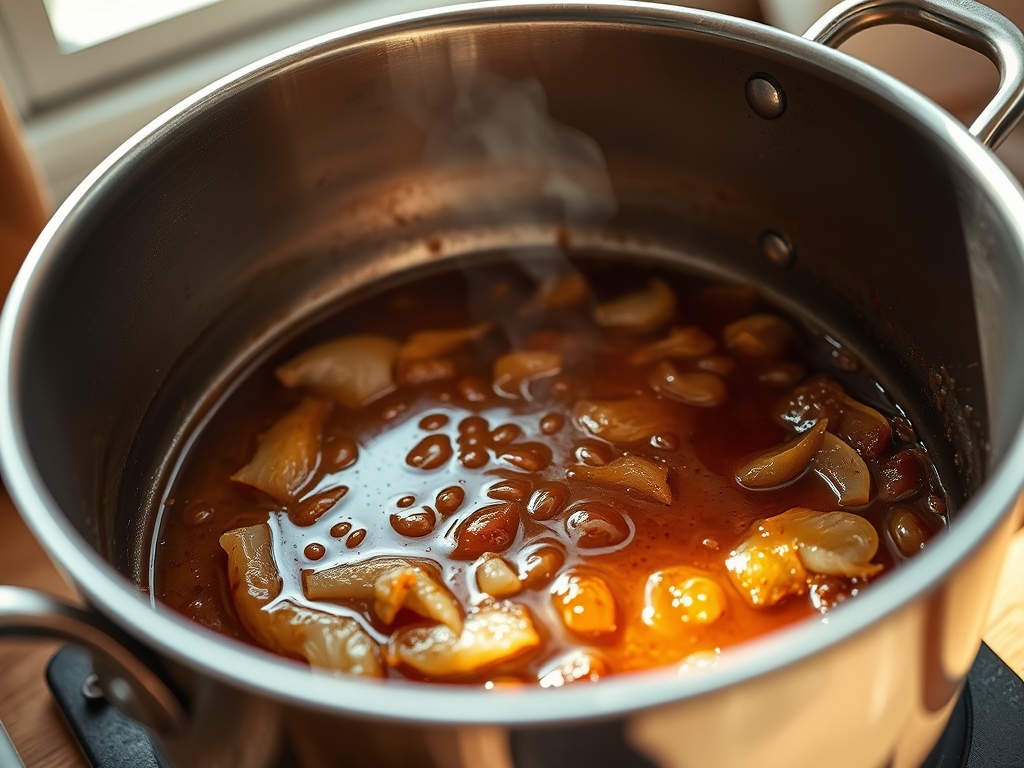
Pour all the liquid from your roasting pan into a fat separator. Allow the mixture to settle so the clear, golden fat rises to the top while the dark, nutrient-dense juices sink to the bottom. Measure out 120ml of that liquid fat and return it to the roasting pan or a heavy-bottomed saucier.
Pro Tip: Using a digital scale to measure your fat ensures a perfect 1:1 ratio with your flour. This precision prevents the gravy from becoming greasy or overly pasty. The science here is simple: you need enough fat to coat every starch granule to prevent clumping.
Step 2: The Roux Infrastructure
Set your pan over medium heat and whisk in the flour. Use a bench scraper to incorporate any bits of fond stuck to the corners of the roasting pan. Cook the mixture for 3 to 5 minutes until it smells nutty and reaches the color of a toasted almond.
Pro Tip: This is the "Blonde Roux" stage. Cooking the flour neutralizes the raw cereal taste and begins the dextrinization of starches, which allows for better thickening power. Use a flat whisk to ensure no flour remains trapped in the pan's seams.
Step 3: The Deglaze Maneuver
Increase the heat slightly and pour in the white wine. Use the steam to vigorously deglaze the pan, lifting every molecule of caramelized protein from the surface. The acidity in the wine acts as a solvent, breaking down the tough bonds of the fond and adding a piquant brightness to the base.
Pro Tip: Alcohol has a lower boiling point than water. As it evaporates, it carries aromatic compounds to your nose and prepares the palate for the heavier fats. This creates a multi-dimensional flavor profile that cuts through the richness of the turkey.
Step 4: Fluid Integration
Slowly stream in your stock and reserved turkey juices while whisking constantly. Do not dump the liquid in all at once; this shocks the starch and creates "lumps of sorrow." Bring the mixture to a gentle simmer and watch as the proteins begin to aerate and thicken.
Pro Tip: Starch granules swell and burst at approximately 175 degrees Fahrenheit (80 Celsius). This is known as starch gelatinization. You must reach a simmer to achieve the maximum viscous potential of your gravy.
Step 5: The Final Refinement
Reduce the heat to low and stir in your fresh herbs. Taste for seasoning. If the gravy is too thick, whisk in a tablespoon of stock. If it is too thin, continue to simmer and render out the excess moisture. Strain the final product through a fine-mesh chinois for a professional, silken finish.
Pro Tip: Straining is the difference between home-cook level and executive chef status. It removes spent herb stems and any stray coagulated egg white or protein bits from the turkey, ensuring a flawless pour from the Roaster to Gravy Boat.
Section B: Prep & Timing Fault-Lines:
The most common failure is the "Cold Stock Collapse." If you add ice-cold stock to a hot roux, the fat solidifies instantly around the flour, creating indestructible lumps. Always ensure your stock is at least room temperature. Another timing error is resting the turkey too long without covering it; the drippings will gelatinize in the pan, making them difficult to extract. If this happens, add a splash of boiling water to the pan to re-liquefy the essence before you begin your roux.
THE VISUAL SPECTRUM
Section C: Thermal & Visual Troubleshooting:
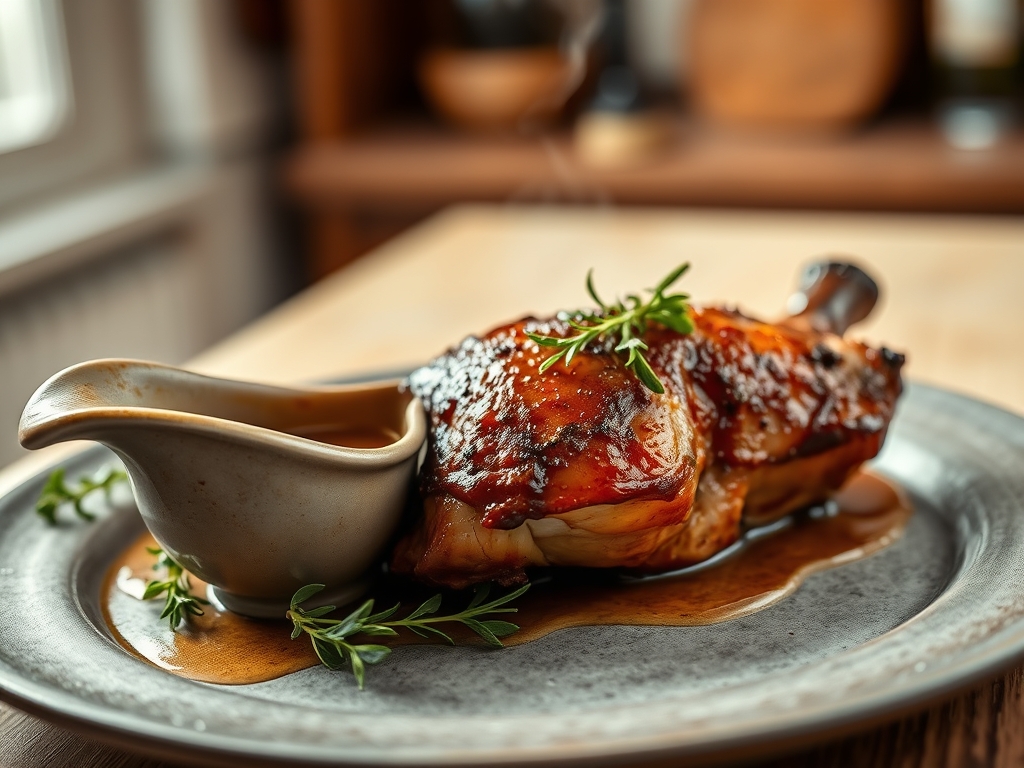
Look at the Masterclass photo above. Notice the deep, mahogany hue and the way the sauce coats the back of a spoon (the "nappe" stage). If your gravy looks pale or "milky," you did not cook your roux long enough or failed to deglaze the fond properly. Solution: Add a teaspoon of Worcestershire sauce or a drop of Gravy Master to correct the pigment. If the surface has a shimmering oil slick, you have an excess of fat. Use a rolled-up paper towel to gently blot the surface. If the texture appears grainy, the flour was not fully integrated into the fat; a quick 30-second pulse with an immersion blender will re-emulsify the mixture and restore the visual integrity.
THE DEEP DIVE
Macro Nutrition Profile:
Per 100ml serving, this gravy contains approximately 120 calories, 9g of fat, 6g of carbohydrates, and 2g of protein. While calorie-dense, the high collagen content from the natural turkey juices provides essential amino acids that store-bought versions lack.
Dietary Swaps:
- Vegan: Replace turkey fat with vegan butter and use a rich mushroom umami broth as the base.
- Keto: Eliminate the flour. Use heavy cream and a pinch of xanthan gum (0.5 tsp per 2 cups) to achieve thickness.
- Gluten-Free: Substitute all-purpose flour with a 1:1 GF flour blend or use cornstarch (slurry method) at the end of the process.
Meal Prep & Reheating Science:
Gravy is a sensitive emulsion. When cooling, place plastic wrap directly on the surface to prevent a skin from forming. To reheat, do not use a microwave; the uneven waves will break the emulsion. Instead, use a small saucepan over low heat and add a splash of water or stock to loosen the molecular bonds as the fats melt.
THE KITCHEN TABLE
Why is my gravy bitter?
You likely scorched the flour or the pan drippings. Once the Maillard reaction goes too far into carbonization, the flavor profile turns acrid. Always monitor your roux color and keep the heat at a steady medium-low.
Can I make this ahead of time?
Yes. Prepare a base gravy using turkey stock and a roux two days prior. On the big day, simply whisk in the fresh pan drippings and deglazed fond to "supercharge" the flavor before serving.
How do I fix lumps without a blender?
Force the gravy through a fine-mesh strainer or a chinois. This mechanical filtration is the most reliable way to ensure a smooth texture if your whisking technique fails during the fluid integration stage.
What if it is too salty?
Do not add more water, as this dilutes the flavor. Instead, add a splash of heavy cream or a teaspoon of apple cider vinegar. The fat or acid will mask the sodium perception on your taste buds.