Listen closely because the structural integrity of your dinner is currently under threat. We are not merely folding dough; we are constructing a pressurized containment vessel for molten, savory joy. The humble meat pocket is a marvel of culinary engineering that relies entirely on the mechanical success of Empanada Sealing. If your seal fails, the internal moisture flashes into steam, the structural walls breach, and your precious filling escapes into the frying oil, resulting in a greasy, hollow disappointment. We are here to prevent that catastrophic system failure. Imagine the crunch of a perfectly hydrated crust yielding to a piquant, steaming core of seasoned beef. This is the gold standard of portable gastronomy. To achieve this, we must treat the dough like high-grade architectural cladding and the closure like a watertight weld. We are moving beyond the amateur fork-crimp method. We are entering the realm of the "repulgue," where tension and overlapping folds create a reinforced border capable of withstanding extreme thermal expansion. Prepare your station; we are about to audit your technique.
THE DATA MATRIX
| Metric | Specification |
|---|---|
| Prep Time | 45 Minutes |
| Execution Time | 20 Minutes |
| Yield | 12 Units |
| Complexity (1-10) | 7 |
| Estimated Cost per Serving | $1.15 |
THE GATHERS
Ingredient Protocol:
- 500g / 4 cups All-purpose flour (unbleached)
- 115g / 1/2 cup Unsalted butter (chilled and cubed)
- 240ml / 1 cup Ice water
- 5g / 1 tsp Fine sea salt
- 1 Large egg (for wash)
- 450g / 1 lb Ground beef (80/20 lean-to-fat ratio)
- 200g / 1.5 cups Yellow onion (finely diced)
- 10g / 2 tsp Smoked paprika
- 5g / 1 tsp Cumin seeds (toaded and ground)
- 30ml / 2 tbsp Beef tallow or lard
Section A: Ingredient Quality Audit:
If your flour feels gritty or lacks protein, your dough will fail to develop the necessary gluten network for a successful stretch. Switch to a brand with at least 11% protein content. If your butter is too soft, it will emulsify into the flour rather than creating the distinct layers needed for a flaky crust. Keep it at 4 degrees Celsius. For the filling, if the beef is too lean, the interior will be dry and lackluster. You need the fat to render and create a viscous sauce that coats the palate. If your onions are too watery, sauté them longer to evaporate excess moisture before adding the meat; this prevents the dreaded "soggy bottom" syndrome.
THE MASTERCLASS
Step-by-Step Execution:
1. The Hydration Phase
Combine flour and salt in a large bowl. Use a bench scraper to cut the chilled butter into the flour until the mixture resembles coarse sand. Gradually add ice water, mixing until a shaggy mass forms. Do not overwork the dough; you want to preserve small pockets of fat.
Pro Tip: Use a digital scale for the water. Volumetric measurements are notoriously inaccurate. Precise hydration ensures the dough is elastic enough for Empanada Sealing without tearing under pressure.
2. The Filling Reduction
In a heavy-bottomed saucier, melt the tallow and sauté onions until translucent. Add the beef, breaking it up into fine granules. Infuse the mixture with paprika and cumin. Cook until the liquid has reduced by half, ensuring the flavors are concentrated.
Pro Tip: After cooking, chill the filling completely. A warm filling will melt the fats in the dough prematurely, compromising the structural integrity of the pocket before it even hits the heat.
3. The Structural Cut
Roll the dough to a thickness of 3mm on a lightly floured surface. Use a circular cutter or a sharp knife to create 12cm discs. Ensure the edges are clean and not frayed; a ragged edge is the primary cause of seal failure.
Pro Tip: Let the dough discs rest for ten minutes before filling. This allows the gluten to relax, preventing the dough from snapping back and shrinking during the assembly process.
4. The Precision Fold
Place two tablespoons of chilled filling in the center of a disc. Fold the dough over to create a half-moon. Press the edges firmly with your thumb to create a flat, 1cm border. This is the foundation of your Empanada Sealing.
Pro Tip: Moisten the inner edge with a tiny amount of water or egg wash. This acts as a biological adhesive, creating a protein bond that holds the two layers of dough together during the fry.
5. The Repulgue Manuever
Starting at one corner, tuck the edge of the dough over itself, pressing down to lock it. Repeat this overlapping motion along the entire curve, creating a braided effect. This creates a reinforced "rope" that acts as a secondary containment wall.
Pro Tip: Keep your fingers lightly floured. If the dough sticks to your hands, the tension of the fold will be uneven, leading to weak points where steam can escape and cause an explosion.
6. The Thermal Finish
Heat your oil to 180 degrees Celsius. Brush each pocket with egg wash to ensure a deep golden hue. Fry in small batches, turning once, until the exterior is crisp and the internal temperature reaches 74 degrees Celsius.
Pro Tip: Use an infrared thermometer to monitor oil temperature. If the oil drops below 170 degrees, the dough will absorb excess fat; if it rises above 190 degrees, the exterior will char before the interior is heated.
Section B: Prep & Timing Fault-Lines:
The most common human error is rushing the cooling phase. If you attempt Empanada Sealing with warm filling, the dough will become "sweaty" and lose its grip. Another critical failure is overcrowding the pan. Each pocket requires adequate space for the oil to circulate; otherwise, the temperature drops, and the crust becomes greasy rather than crisp. Use a timer to ensure consistent results across all batches.
THE VISUAL SPECTRUM
Section C: Thermal & Visual Troubleshooting:
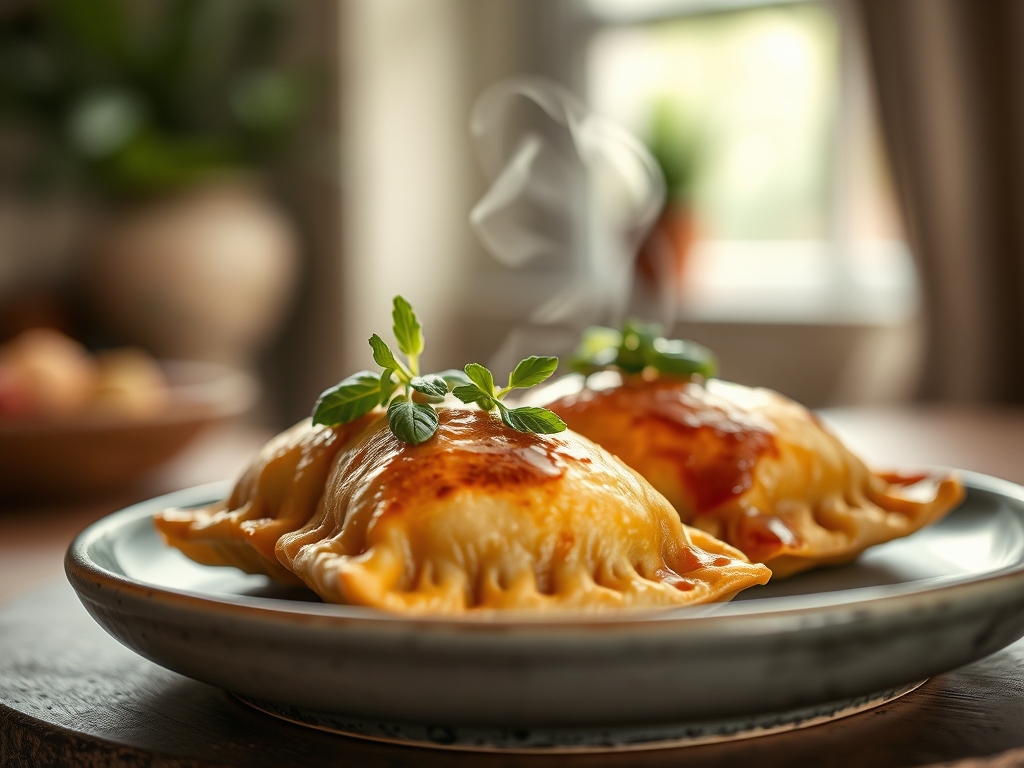
Look at the Masterclass photo. Notice the uniform, golden-brown "tiger spotting" on the surface. If your pockets are pale and dull, you likely skipped the egg wash or your oil was too cold. If the edges are dark but the center is light, your oil is too hot. If the braid of your Empanada Sealing appears blurred or melted, the dough was too warm during the folding process. The goal is a high-contrast, architectural ridge that remains sharp even after frying. If the pocket has "blistered," it means the dough was well-hydrated and the heat was sufficient to flash the internal moisture into steam without breaching the seal.
THE DEEP DIVE
Macro Nutrition Profile:
A standard beef empanada contains approximately 280 calories. This includes 14g of protein, 18g of fats (mostly from the crust and beef), and 22g of carbohydrates. While calorie-dense, the high protein and fat content provide significant satiety.
Dietary Swaps:
For a Vegan iteration, substitute butter with chilled coconut oil and use a mushroom and lentil base for the filling. For Keto enthusiasts, use an almond flour and mozzarella "fathead" dough. Gluten-Free versions require a high-quality 1-to-1 flour blend with added xanthan gum to mimic the elasticity needed for the fold.
Meal Prep & Reheating Science:
To maintain molecular structure, freeze empanadas in a single layer before bagging. When reheating, avoid the microwave, which turns the crust into rubber. Use an air fryer or oven at 190 degrees Celsius to re-crisp the fats and aerate the internal layers.
THE KITCHEN TABLE
Why does my empanada burst in the oil?
This is usually caused by trapped air or a weak seal. Ensure you press all air out before the final Empanada Sealing. If the filling is too watery, the steam pressure becomes too high for the dough to contain.
Can I bake these instead of frying?
Yes. Bake at 200 degrees Celsius for 20 minutes. While you lose the specific texture of deep-frying, the egg wash will still provide a beautiful Maillard reaction and a satisfying crunch.
How do I keep the dough from being tough?
Avoid over-kneading. Once the dough holds together, stop. Over-working develops too much gluten, which makes the pocket chewy rather than flaky. Let the dough rest to ensure the proteins relax.
What is the best way to store leftovers?
Store in an airtight container in the fridge for up to 3 days. To maintain the integrity of the Empanada Sealing, place a paper towel in the container to absorb any migrating moisture from the filling.