Imagine the scene: a high-pressure kitchen line where the air is thick with the scent of toasted flour and simmering butter. You are not just cooking; you are performing an engineering feat. The humble ravioli is a pressurized vessel of flavor, and without a rigorous adherence to Ravioli Filling Logic, your dinner service is one blowout away from a catastrophic structural failure. We are talking about the integrity of the seal, the tensile strength of the pasta envelope, and the precise moisture content of the interior. When that dough hits the boiling water, physics takes over. If your filling is too wet, steam builds internal pressure that shreds the seams. If it is too dry, you are serving a chalky disappointment. We demand a filling that is viscous enough to hold its shape but supple enough to melt into a decadent sauce upon the first bite. This is the audit of the century. We are stripping back the flour-dusted mystery to reveal the cold, hard science of the perfect stuffed pasta.
THE DATA MATRIX
| Metric | Specification |
|---|---|
| Prep Time | 45 Minutes |
| Execution Time | 15 Minutes |
| Yield | 4 Servings (approx. 24 ravioli) |
| Complexity | 7/10 |
| Estimated Cost per Serving | $4.50 |
THE GATHERS
Ingredient Protocol:
- 500g / 4 cups "00" Flour (High protein for gluten development)
- 4 Large Eggs (Room temperature for better emulsification)
- 250g / 1 cup Whole Milk Ricotta (Strained for 2 hours)
- 100g / 1 cup Freshly Grated Parmigiano-Reggiano
- 2g / 0.5 tsp Nutmeg (Freshly grated to infuse warmth)
- 5g / 1 tsp Sea Salt
- 50g / 0.25 cup Fresh Spinach (Blanched, shocked, and squeezed bone-dry)
- 15ml / 1 tbsp Extra Virgin Olive Oil
Section A: Ingredient Quality Audit:
The primary failure point in most fillings is excess water. If your ricotta looks like soup, your ravioli will fail. Technical Fix: Suspend the cheese in cheesecloth over a bowl for at least two hours; the liquid that drains away is the enemy of structural integrity. If your flour is clumping, it has absorbed ambient humidity. Sift it twice to aerate the particles, ensuring a smooth, elastic dough. If the eggs are cold from the fridge, the fats will not integrate properly with the flour, leading to a brittle envelope. Warm them in a bowl of tepid water for five minutes before cracking to ensure a perfect molecular bond.
THE MASTERCLASS
Step-by-Step Execution:
1. The Flour Well Construction
Create a mound of "00" flour on a clean work surface. Use a fork or a small bowl to create a wide, deep well in the center. Pour your room-temperature eggs into the center.
Pro Tip: Use a bench scraper to gradually incorporate the flour from the inner walls of the well. This prevents the "egg levee" from breaking and flooding your station. The science here is controlled hydration; you want to slowly saturate the proteins to build a strong gluten network.
2. Kneading for Tensile Strength
Once a shaggy mass forms, knead the dough by hand for at least 10 minutes. The dough should become smooth, elastic, and bounce back when poked.
Pro Tip: Use a digital scale to ensure your dough balls are consistent in weight. Kneading aligns the gluten strands, which provides the "tensile strength" required to hold the filling during the violent agitation of a rolling boil.
3. The Filling Homogenization
In a stainless steel mixing bowl, combine the strained ricotta, parmigiano, nutmeg, and finely minced spinach. Fold the mixture until it is completely uniform.
Pro Tip: Use a silicone spatula to press the mixture against the sides of the bowl. This removes air pockets. Air is the enemy of Ravioli Filling Logic; trapped air expands when heated, causing the pasta to burst.
4. Precision Extrusion and Sealing
Roll the pasta sheets until they are translucent. Place teaspoon-sized dollops of filling two inches apart. Lightly mist the dough with water before draping the top sheet over.
Pro Tip: Use a pastry wheel or a brass pasta cutter for a clean edge. Press firmly around the filling to evacuate all air. A clean cut ensures the starches on the edges fuse together, creating a hermetic seal.
5. The Controlled Simmer
Bring a large pot of salted water to a gentle simmer, not a rolling boil. Drop the ravioli in and cook for 3 to 4 minutes until they float.
Pro Tip: Use a spider skimmer to remove the pasta. Tossing them into a colander is too traumatic for the delicate seams. Transfer them directly into a saucier containing warm brown butter to render the flavors together.
Section B: Prep & Timing Fault-Lines:
The most common human error is the "Resting Gap." If you do not let the dough rest for at least 30 minutes after kneading, the gluten will be too tight, causing the dough to snap back and shrink during rolling. This results in thick, gummy edges. Conversely, if you leave the rolled sheets out too long before filling, they will dry out and refuse to seal. Technical Fix: Keep unworked dough under an inverted bowl or wrapped in plastic to maintain its moisture profile.
THE VISUAL SPECTRUM
Section C: Thermal & Visual Troubleshooting:
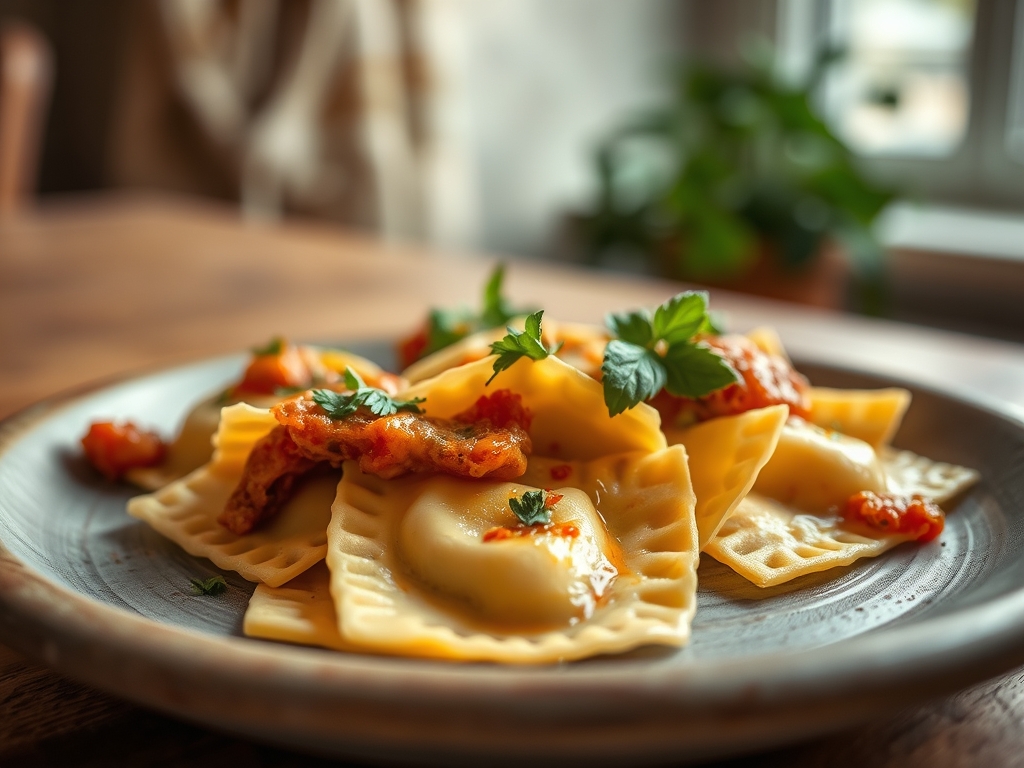
Referencing the Masterclass photo, notice the piquant golden hue of the pasta and the slight translucency where the filling sits. If your ravioli appear chalky or white, they are undercooked or the dough was too dry. If the filling is visible through a "blown out" seam, your water was boiling too aggressively.
Uneven browning in the pan indicates that you did not deglaze properly or the butter was not distributed evenly. To achieve that perfect visual finish, ensure the pasta is glossy, not greasy. If the colors look dull, a final flash of heat with a splash of starchy pasta water will create an emulsion that coats the ravioli in a shimmering, professional-grade glaze.
THE DEEP DIVE
Macro Nutrition Profile:
A standard serving of four large ravioli provides approximately 350 calories, 15g of protein, 12g of fat, and 45g of carbohydrates. The high protein content comes from the "00" flour and the egg-heavy dough, which provides a lower glycemic index than standard store-bought pasta.
Dietary Swaps:
- Vegan: Replace eggs with a "flax egg" or specialized vegan pasta flour. Use a cashew-based ricotta and nutritional yeast to replicate the viscous texture of the cheese.
- Keto: This is a challenge for pasta, but a cabbage-leaf wrap or a almond-flour/xanthan gum dough can simulate the envelope.
- GF: Use a high-quality 1-to-1 gluten-free flour blend, but increase the egg count to provide the structural "glue" that gluten usually provides.
Meal Prep & Reheating Science:
To maintain molecular structure, do not freeze raw ravioli in a heap. Freeze them in a single layer on a parchment-lined tray before transferring to a bag. When reheating, never use a microwave; it vibrates water molecules too violently, turning the pasta into rubber. Instead, drop frozen ravioli directly into simmering water or steam them gently to revive the interior moisture.
THE KITCHEN TABLE
Why did my ravioli float immediately and then sink?
This usually indicates trapped air rather than cooked dough. The air expands, making them buoyant. Ensure you press all air out during the sealing phase to ensure the "float" actually signifies the protein coagulation of the dough.
Can I use a food processor for the dough?
Yes, it is efficient for the initial mix, but you must finish by hand. The mechanical blades can over-shear the gluten, while hand-kneading allows you to feel the exact moment the dough reaches its peak elastic state.
My filling is leaking out into the water!
Your seal failed. This is often caused by flour dust on the "mating surfaces" of the pasta sheets. Use a very light mist of water or an egg wash to ensure the two layers of dough bond at a molecular level.
What is the best way to store fresh filling?
Store it in a piping bag in the refrigerator. This keeps the filling compact, prevents oxidation of the spinach, and makes the extrusion process much cleaner when you are ready to assemble your pasta envelopes.