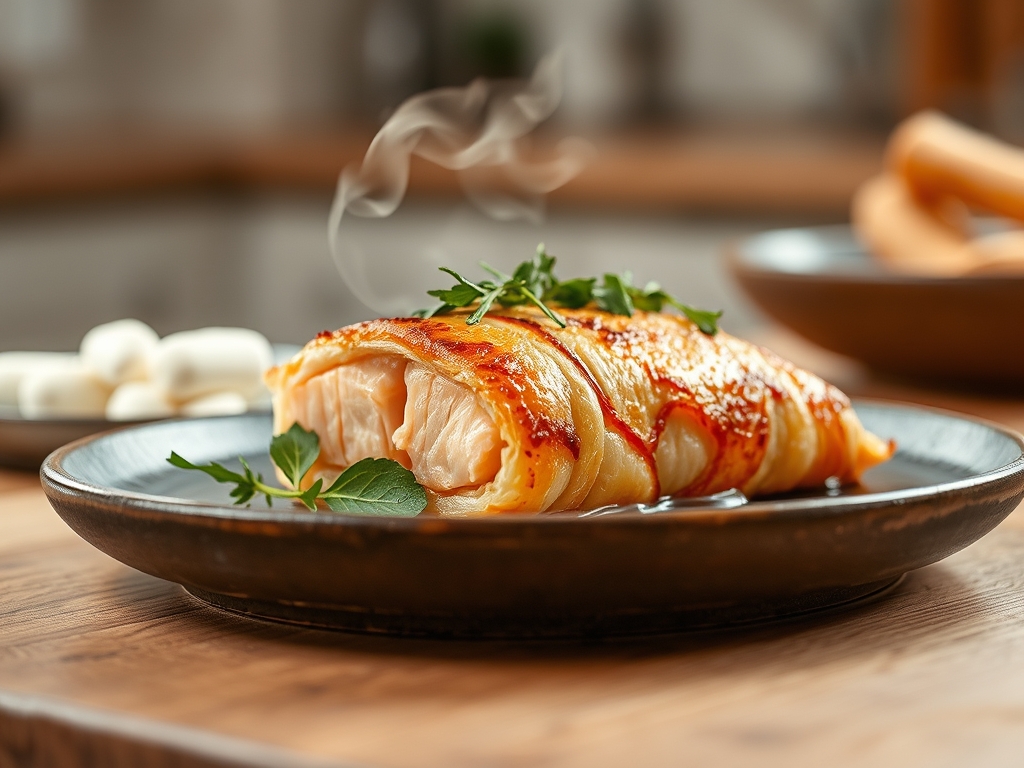
Imagine a fortress of golden, laminated butter shielding a core of iridescent pink protein. This is the Coulibiac; the undisputed sovereign of the puff pastry world. We are not merely talking about a casual dinner; we are discussing an architectural marvel of the culinary arts. When you execute a Pastry Wrapped Salmon, you are managing a complex thermal exchange where the dough must dehydrate and crisp while the interior remains a succulent, medium-rare sanctuary. The scent is intoxicating. It is the smell of Maillard reactions meeting the floral notes of fresh dill and the earthy depth of wild mushrooms. To pull this off, you must think like a structural engineer and act like a jeweler. One wrong move and you have a soggy bottom or a dry, chalky fish. We do not accept mediocrity in this kitchen. We demand precision, high-quality fats, and a total mastery of moisture management. Prepare your workstations. We are about to build a masterpiece that defies the laws of soggy crusts.
THE DATA MATRIX
| Metric | Specification |
|---|---|
| Prep Time | 60 Minutes |
| Execution Time | 35 Minutes |
| Yield | 6 Servings |
| Complexity | 8 / 10 |
| Estimated Cost per Serving | $9.50 – $12.00 |
THE GATHERS
Ingredient Protocol:
- Salmon Component: 1 kg / 2.2 lbs Center-cut skinless salmon fillet.
- Pastry Component: 500g / 1.1 lbs High-butter content puff pastry (chilled).
- Mushroom Duxelles: 500g / 1.1 lbs Cremini mushrooms, finely minced.
- Herb Profile: 30g / 1 cup Fresh dill and parsley, finely chopped.
- Binding Agent: 100g / 0.5 cup Cooked long-grain rice or buckwheat.
- Crepes (Moisture Barrier): 2 Large eggs and 125ml / 0.5 cup whole milk for thin crepes.
- Aromatics: 2 Large shallots, infused with 50g / 3.5 tbsp unsalted butter.
- Egg Wash: 2 Egg yolks mixed with 15ml / 1 tbsp heavy cream.
Section A: Ingredient Quality Audit:
If your salmon feels slimy or smells "fishy," the protein structure is already degrading. Technical fix: Rinse the fillet in ice-cold salted water and pat dry with surgical precision. If your puff pastry is made with vegetable shortening instead of pure butter, it will lack the structural integrity to aerate properly. Always check the label for "All Butter." If your mushrooms are releasing too much liquid, you must render that moisture out in a dry pan before adding fats. Excess water is the enemy of the Pastry Wrapped Salmon.
THE MASTERCLASS
Step 1: The Duxelles Dehydration
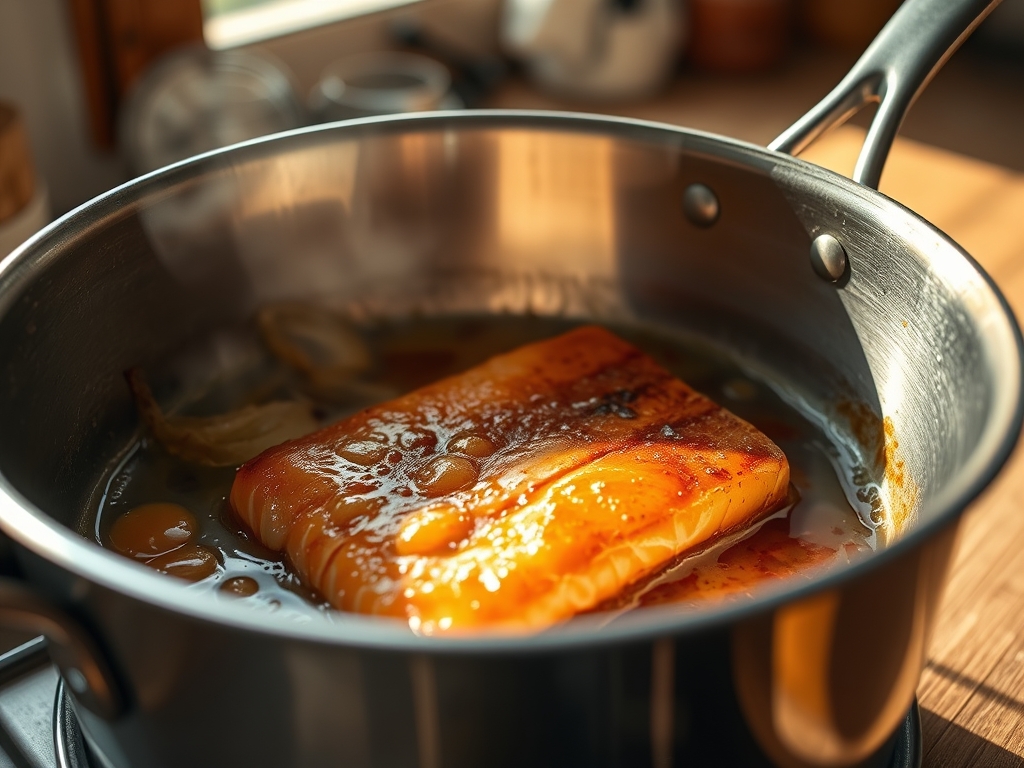
Mince your mushrooms into a fine rubble. In a wide saucier, sauté shallots in butter until translucent, then add mushrooms. Cook over medium-high heat until all liquid has evaporated and the mixture is concentrated.
Pro Tip: Use a heavy-bottomed pan to ensure even heat distribution. The goal is to create a viscous paste that provides flavor without adding steam to the interior of the pastry.
Step 2: The Crepe Shield Construction
Whisk eggs, milk, and flour to create a thin batter. Cook 3 to 4 paper-thin crepes. These act as a secondary "skin" that absorbs any stray juices from the salmon before they reach the puff pastry.
Pro Tip: Professional chefs use a digital scale to ensure the batter consistency is identical every time. This barrier is the secret to a crisp bottom crust.
Step 3: Protein Preparation and Seasoning
Trim your salmon fillet into a uniform rectangular block. Season aggressively with sea salt and white pepper. Ensure the fish is cold when it meets the pastry to prevent the butter from melting prematurely.
Pro Tip: Use a sharp carving knife to ensure clean edges. Ragged edges trap air pockets which can lead to uneven steaming during the bake.
Step 4: The Structural Assembly
Lay out your chilled puff pastry on a floured surface. Place the crepes in the center, followed by a layer of rice, then the mushroom duxelles, and finally the salmon. Wrap the pastry tightly, sealing the edges with egg wash.
Pro Tip: Use a bench scraper to lift and tuck the pastry edges. A tight wrap prevents the "gap" that often forms between the fish and the crust.
Step 5: The Scoring and Glazing
Brush the entire surface with your egg yolk and cream mixture. Use the back of a knife to score a decorative diamond pattern into the pastry, being careful not to pierce through to the fish.
Pro Tip: Scoring increases the surface area for the Maillard reaction, resulting in a deeper, more piquant crust flavor and a stunning visual finish.
Step 6: The Thermal Execution
Bake at 200C / 400F for 25 to 30 minutes. Use a probe thermometer to pull the dish when the internal temperature of the salmon hits 48C / 118F for a perfect medium-rare.
Pro Tip: Let the dish rest for 10 minutes on a wire rack. This allows the internal juices to redistribute, ensuring the pastry stays dry and the fish stays moist.
Section B: Prep & Timing Fault-Lines:
The most common failure is "Pastry Slump," caused by the dough getting too warm during assembly. If the pastry feels tacky, stop and refrigerate the entire assembly for 15 minutes. Another fault-line is the "Soggy Base," usually caused by skipping the rice or crepe layer. These elements are not optional; they are the insulation for your infrastructure.
THE VISUAL SPECTRUM
Section C: Thermal & Visual Troubleshooting:
Look at the Masterclass photo. Notice the deep, mahogany gold of the crust. If your pastry is pale, your oven temperature is too low or your egg wash lacked enough fat. If the pastry is dark but the center is cold, your puff pastry was too thick. Aim for a thickness of 3mm. If you see liquid leaking out of the seams, your seal was compromised. Ensure you use a digital scale to measure your ingredients, as excess filling will stress the pastry seams and cause "blowouts."
THE DEEP DIVE
Macro Nutrition Profile:
A single serving of Pastry Wrapped Salmon provides approximately 650 calories. It is high in Omega-3 fatty acids, protein (35g), and carbohydrates (45g) from the pastry and rice layers. The fat content is significant (38g), primarily from the butter in the puff pastry.
Dietary Swaps:
- Keto: Replace puff pastry with a fat-head dough (almond flour and mozzarella) and swap rice for cauliflower rice.
- Vegan: Utilize a "Beet Wellington" approach with roasted beets and vegan puff pastry (oil-based).
- GF: Use a certified gluten-free puff pastry, though be aware it may be more brittle during the wrapping phase.
Meal Prep & Reheating Science:
To maintain the molecular structure, never microwave this dish. The waves will turn the pastry into rubber. Instead, reheat in a 175C / 350F oven for 12 minutes. This re-crisps the fats in the pastry while gently warming the protein without overcooking it.
THE KITCHEN TABLE
Why is my pastry raw on the bottom?
This usually happens if the salmon was too wet or the oven floor heat was insufficient. Use a preheated baking stone or a heavy dark baking sheet to provide an immediate thermal boost to the base.
Can I make this 24 hours in advance?
Yes, but do not add the egg wash until the moment it goes into the oven. Store the wrapped salmon in the coldest part of the refrigerator to keep the butter layers distinct and solid.
What is the best sauce for this dish?
A classic Hollandaise or a Beurre Blanc infused with lemon and capers provides the necessary acidity to cut through the rich, buttery pastry and the fatty salmon.
How do I prevent the salmon from overcooking?
Precision timing is key. Use an instant-read thermometer. Remember that carry-over cooking will raise the internal temperature by about 5 degrees while the dish rests on the counter.
Why did my pastry shrink during baking?
This is caused by "gluten snap-back." If you stretch the pastry while wrapping, it will contract in the heat. Always drape the pastry loosely over the filling before sealing it.