Forget the romanticized image of a grandmother stirring a pot for six hours in a drafty cottage. We are here to talk about high-performance culinary architecture. A true French stew is not a collection of boiled meats; it is a calculated sequence of chemical transformations that turn tough connective tissue into liquid gold. When we analyze the Beef Bourguignon Data, we see a blueprint for flavor density that relies entirely on the successful management of the Maillard reaction and the precise emulsification of red wine tannins with bovine lipids. This is a dish of structural integrity. You are building a foundation of aromatics, layering in the deep, savory notes of rendered bacon fat, and finally suspending it all in a viscous, velvet-like sauce. Every step is a data point. Every sear is a thermal event. If you treat this like a simple soup, you have already failed the audit. We are seeking the perfect intersection of collagen breakdown and aromatic infusion. Prepare your station; we are about to optimize your kitchen output.
THE DATA MATRIX
| Metric | Specification |
|---|---|
| Prep Time | 45 Minutes |
| Execution Time | 3.5 Hours |
| Yield | 6 Servings |
| Complexity (1-10) | 7 |
| Estimated Cost per Serving | $8.50 – $12.00 |
THE GATHERS
Ingredient Protocol:
- 1.5 kg / 3.3 lbs Beef Chuck (cubed into 5cm pieces)
- 200g / 7 oz Slab Bacon (lardons)
- 750ml / 1 Bottle Dry Red Wine (Pinot Noir or Burgundy)
- 500ml / 2 cups Beef Bone Broth (high gelatin content)
- 30ml / 2 tbsp Tomato Paste
- 45g / 3 tbsp All-purpose Flour
- 30g / 2 tbsp Unsalted Butter
- 12-15 Pearl Onions (peeled)
- 450g / 1 lb Cremini Mushrooms (quartered)
- 3 Large Carrots (thick diagonal slices)
- 4 Garlic Cloves (smashed)
- 1 Bouquet Garni (Thyme, Parsley, Bay Leaf)
Section A: Ingredient Quality Audit:
The primary failure point in many stews is the beef selection. If your "stew meat" is too lean, the final product will be dry and stringy rather than succulent. Look for heavy intramuscular marbling. If you find yourself with lean cuts, the technical fix is a long-duration low-temperature braise to prevent muscle fibers from tightening too aggressively. Another common audit failure is the wine. Avoid "cooking wine" which contains excess sodium. If the wine is too acidic, it will prevent the vegetables from softening. The fix is a pinch of baking soda to neutralize the pH level, though selecting a balanced Pinot Noir is the preferred professional protocol. Finally, ensure your mushrooms are dry. If they are water-logged, they will steam rather than brown, ruining the textural contrast of the garnish.
THE MASTERCLASS
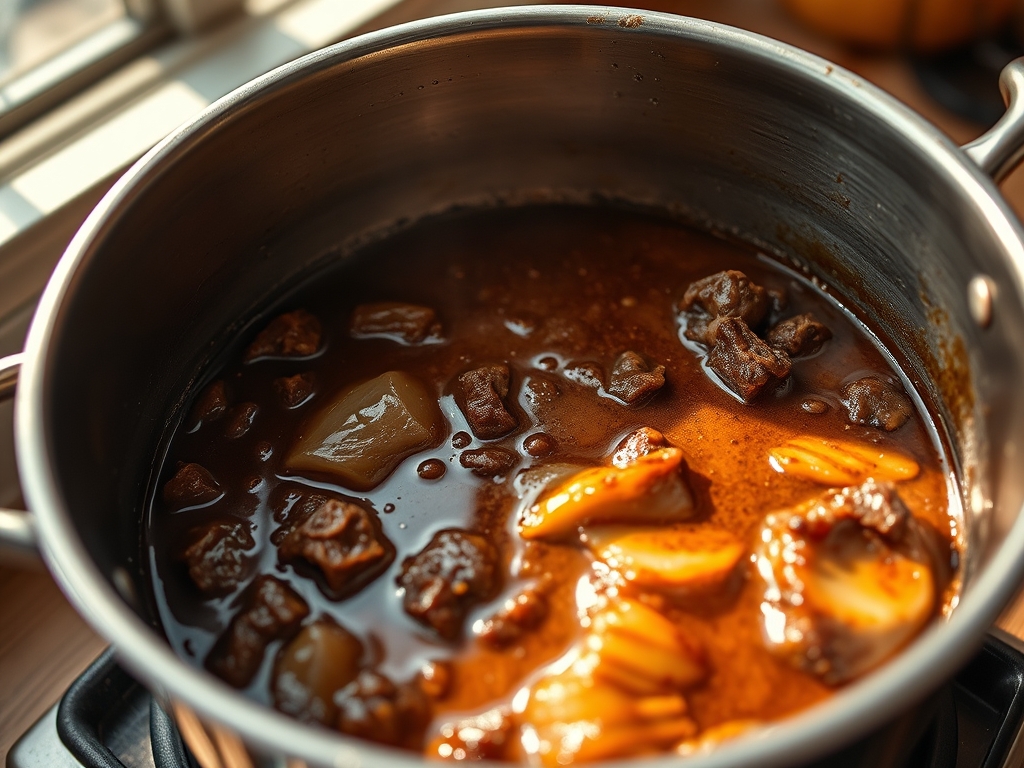
Step 1: The Lipid Extraction
Begin by placing your bacon lardons into a cold saucier or heavy-bottomed Dutch oven. Bring the heat to medium, allowing the fat to render slowly. This creates the base lipid layer for the entire dish. Once crisp, remove the solids with a slotted spoon, leaving the liquid gold behind.
Pro Tip: Starting with a cold pan ensures the fat renders before the exterior of the bacon burns. This provides a more viscous mouthfeel in the final sauce. Use a digital scale to ensure your bacon-to-beef ratio is exactly 1:7 for optimal flavor balance.
Step 2: High-Velocity Searing
Pat the beef cubes bone-dry with paper towels. Season aggressively with salt. Increase the heat to medium-high and sear the beef in batches. Do not crowd the pan. You are looking for a deep, mahogany crust on all sides.
Pro Tip: Moisture is the enemy of the Maillard reaction. If the meat is damp, it will steam, not sear. Using a bench scraper to clear the bottom of the pan between batches prevents burnt protein bits from tainting the flavor profile.
Step 3: The Allium Infusion and Deglaze
Add the carrots and sliced onions to the remaining fat. Sauté until softened, then stir in the tomato paste and flour. Cook for two minutes to remove the raw flour taste. Slowly pour in the wine, using a wooden spoon to deglaze the bottom of the pot, scraping up every bit of fond.
Pro Tip: The fond (the brown bits stuck to the pan) contains concentrated umami. Incorporating it into the liquid phase is essential for the Beef Bourguignon Data to reach its peak savory potential.
Step 4: The Long-Form Braise
Return the beef and bacon to the pot. Add the beef broth, garlic, and bouquet garni. The liquid should just barely cover the meat. Cover with a tight-fitting lid and place in a 160C / 325F oven for 2.5 to 3 hours.
Pro Tip: A heavy lid creates a pressurized environment that forces heat into the center of the beef cubes, accelerating the conversion of collagen into gelatin. Use an oven thermometer to verify your appliance's accuracy.
Step 5: The Garnish Integration
While the beef braises, sauté the mushrooms and pearl onions in butter until golden. Once the beef is fork-tender, remove the pot from the oven. Discard the bouquet garni. Stir in the mushrooms and onions, then simmer on the stovetop for 10 minutes to infuse the flavors.
Pro Tip: Adding the garnish at the end preserves their structural integrity and prevents the mushrooms from becoming mushy. This maintains the "Visual Spectrum" required for a professional presentation.
Section B: Prep & Timing Fault-Lines:
The most frequent human error is rushing the sear. If you do not achieve a dark crust, your sauce will be pale and lack depth. Another fault-line is temperature control. If the braise boils rather than simmers, the meat will toughen. The technical fix is to check the pot every hour; if you see large bubbles, drop the oven temperature by 10 degrees. Timing is also critical. If you add the mushrooms too early, they will vanish into the sauce. Precision in the sequence of operations is what separates a technician from an amateur.
THE VISUAL SPECTRUM
Section C: Thermal & Visual Troubleshooting:
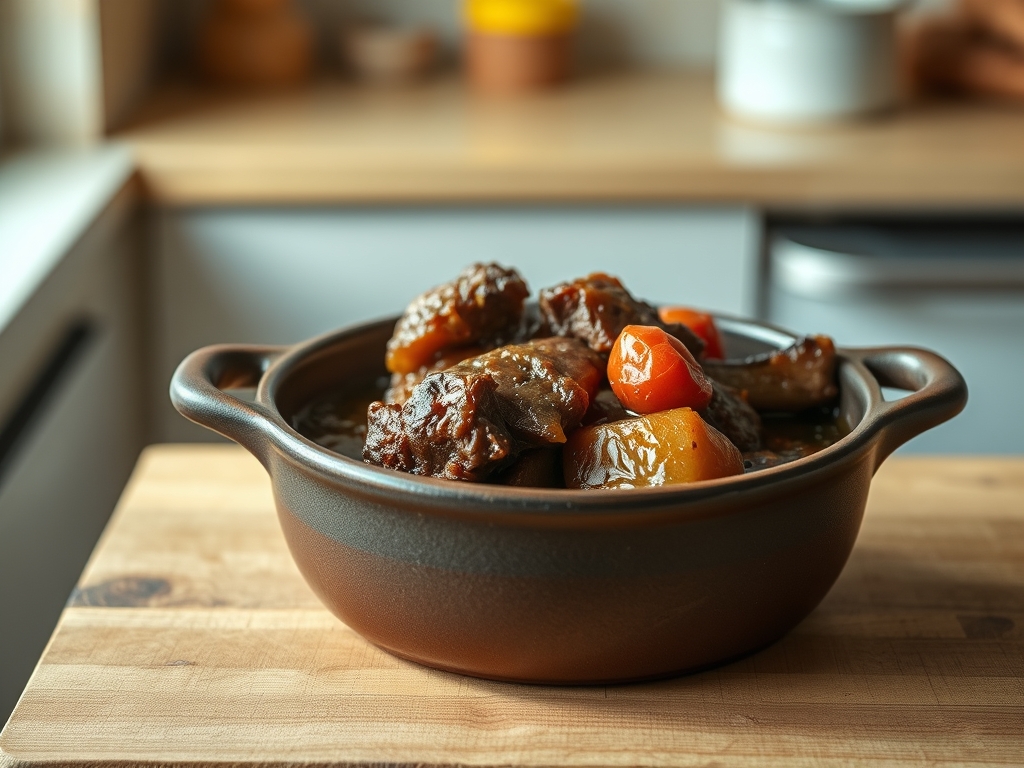
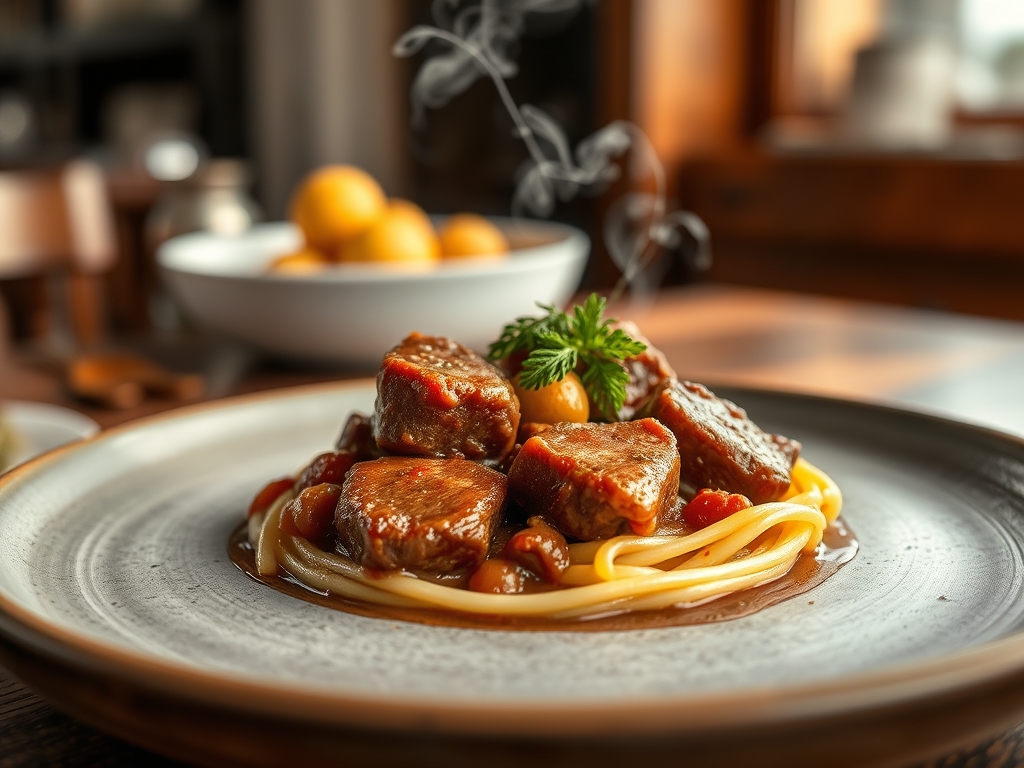
Referencing the Masterclass photo, your final dish should exhibit a deep, glossy, ruby-brown sauce that clings to the meat. If your sauce is thin or watery, it lacks the necessary reduction or flour-to-fat ratio. The fix is to remove the meat and boil the liquid rapidly to aerate and concentrate the proteins. If the colors are dull, you likely overcooked the carrots. To fix this in future batches, cut carrots into larger chunks. If the beef looks grey, your initial sear was insufficient. You can improve the visual appeal of a grey stew by finishing it with a shower of freshly minced parsley to provide a piquant green contrast against the dark sauce.
THE DEEP DIVE
Macro Nutrition Profile:
A standard serving contains approximately 450-550 calories. It is high in protein (35g) and moderate in fat (28g), depending on the trim of the beef. The carbohydrate count remains low (12g) unless served with potatoes or bread. It is a powerhouse of bioavailable iron and zinc.
Dietary Swaps:
- Vegan: Replace beef with "Lion's Mane" mushrooms or seitan. Use a mushroom-based dashi instead of beef broth and swap bacon for smoked paprika and soy-marinated tempeh.
- Keto: Eliminate the flour. Use xanthan gum (0.5 tsp) to thicken the sauce at the end. Replace carrots with radishes, which lose their pepperiness when braised.
- Gluten-Free: Substitute all-purpose flour with a 1:1 gluten-free flour blend or cornstarch slurry.
Meal Prep & Reheating Science:
Beef Bourguignon is famously better the next day. As it cools, the flavors continue to marry, and the gelatin sets into a semi-solid state. To reheat, do not use a microwave; it will turn the beef rubbery. Instead, warm it slowly on the stovetop over low heat. Add a splash of broth or wine to loosen the sauce and restore its viscous texture.
THE KITCHEN TABLE
Why is my sauce purple instead of brown?
This occurs when the wine has not been sufficiently reduced or the beef wasn't seared dark enough. The acidity of the wine reacts with the proteins. Increase your searing time next time to ensure more brown pigments are present.
Can I use a slow cooker for this recipe?
Yes, but you must still sear the meat and sauté the aromatics in a pan first. Simply throwing raw ingredients into a slow cooker will result in a flat, muddy flavor profile that fails the quality audit.
What is the best way to peel pearl onions?
Blanch them in boiling water for 30 seconds, then cold-shock them in ice water. The skins will slip right off. This is a standard professional protocol to save time and maintain the onion's shape.
My beef is still tough after three hours. What happened?
The beef likely hasn't reached the "collagen melt" point. Every cow is different. Continue braising in 30-minute increments until the meat yields to a fork. It is almost impossible to overcook chuck in a liquid environment.