Stop thinking about dessert as a polite conclusion and start viewing it as a high-stakes chemical collision. We are diving into the volatile architecture of Blue Cheese and Honey; a pairing that defies logic and demands total sensory submission. This is not a casual snack. It is a masterclass in the microbial sugar equilibrium. On one side, you have the aggressive, piquant funk of Penicillium roqueforti, a mold that shatters milk fats into sharp, metallic ketones. On the other, the golden, viscous nectar of floral honey, a supersaturated sugar solution that provides the necessary glycemic counterweight. When these two forces collide on a warm, toasted sourdough substrate, they create a flavor profile that is both primal and sophisticated. We are looking for that specific moment where the salt of the dairy meets the enzymatic depth of the hive. This audit will ensure your infrastructure is sound, your temperatures are calibrated, and your final plate achieves a level of pungency that borders on the transcendent. Let us begin the audit of the ultimate dairy-sugar complex.
THE DATA MATRIX
| Metric | Specification |
|---|---|
| Prep Time | 10 Minutes |
| Execution Time | 5 Minutes |
| Yield | 4 Servings |
| Complexity (1-10) | 3 |
| Estimated Cost per Serving | $4.50 |
THE GATHERS
Ingredient Protocol:
- 200g / 7oz High-quality Gorgonzola Dolce or Roquefort
- 120ml / 0.5 cup Raw, unfiltered Clover or Tupelo Honey
- 4 thick slices / 280g Artisanal Sourdough or Walnut Bread
- 50g / 1.75oz Toasted Marcona Almonds or Walnuts
- 10ml / 2 tsp Fresh Thyme leaves (stems removed)
- 2g / 0.5 tsp Flaky Sea Salt (Maldon preferred)
Section A: Ingredient Quality Audit:
If your blue cheese smells like ammonia rather than earth, the proteins have degraded too far. To fix this, scrape the outer layer and let the cheese aerate at room temperature for twenty minutes before serving. If your honey has crystallized into a gritty sludge, do not microwave it. Microwaves create hot spots that destroy the delicate floral aromatics. Instead, place the honey jar in a warm water bath at 40 degrees Celsius until the crystals dissolve and the liquid becomes viscous again. For bread that feels stale, a quick mist of filtered water before toasting will revive the internal crumb structure through steam activation.
THE MASTERCLASS
1. Thermal Tempering of the Dairy
Remove your blue cheese from refrigeration exactly thirty minutes before assembly. Use a digital scale to portion the cheese into 50g segments. Cold cheese suppresses the volatile aromatic compounds that provide the signature piquant punch. By allowing the lipids to soften, you ensure a superior mouthfeel and better integration with the honey.
Pro Tip: Use a professional wire cheese cutter or a thin-bladed knife dipped in hot water to achieve clean slices without crushing the delicate blue veins.
2. Precision Toasting of the Substrate
Place your sourdough slices on a heavy-duty baking sheet. Set your oven to broil or use a specialized toaster. You are looking for the Maillard reaction to produce a deep golden-brown crust while maintaining a soft, hydrated center. A bench scraper can be used to clear away any excessive char or crumbs from the board after toasting.
Pro Tip: The crunch of the toast acts as the structural foundation for the soft cheese; without a rigid substrate, the dish loses its textural contrast.
3. The Honey Infusion and Drizzle
In a small stainless steel saucier, lightly warm the honey with the fresh thyme leaves over the lowest possible heat. Do not simmer. You are merely trying to infuse the honey with herbal oils. Once warm, use a perforated spoon to remove the leaves, or leave them for a rustic aesthetic.
Pro Tip: Warming the honey reduces its viscosity, allowing it to penetrate the crevices of the blue cheese rather than just sitting on top of it.
4. Final Assembly and Texture Layering
Spread the tempered blue cheese onto the warm toast. The residual heat will slightly render the cheese fats, making them spreadable. Top with the toasted nuts for a secondary crunch. Finish with a generous drizzle of the infused honey and a pinch of flaky sea salt to amplify the sugar-salt bridge.
Pro Tip: Always apply the salt last. Salt crystals provide a localized burst of flavor that prevents the honey from becoming cloyingly sweet.
Section B: Prep & Timing Fault-Lines:
The most common failure in this protocol is the "Thermal Gap." If the toast is cold and the cheese is straight from the fridge, the flavors will remain muted and the textures will feel waxy. Ensure your toast is served immediately. If you are prepping for a crowd, keep the toasted bread in a warming drawer at 60 degrees Celsius. Another timing error is over-toasting the nuts; they can go from golden to bitter in seconds. Use a kitchen timer and stay focused during the final thirty seconds of roasting.
THE VISUAL SPECTRUM
Section C: Thermal & Visual Troubleshooting:
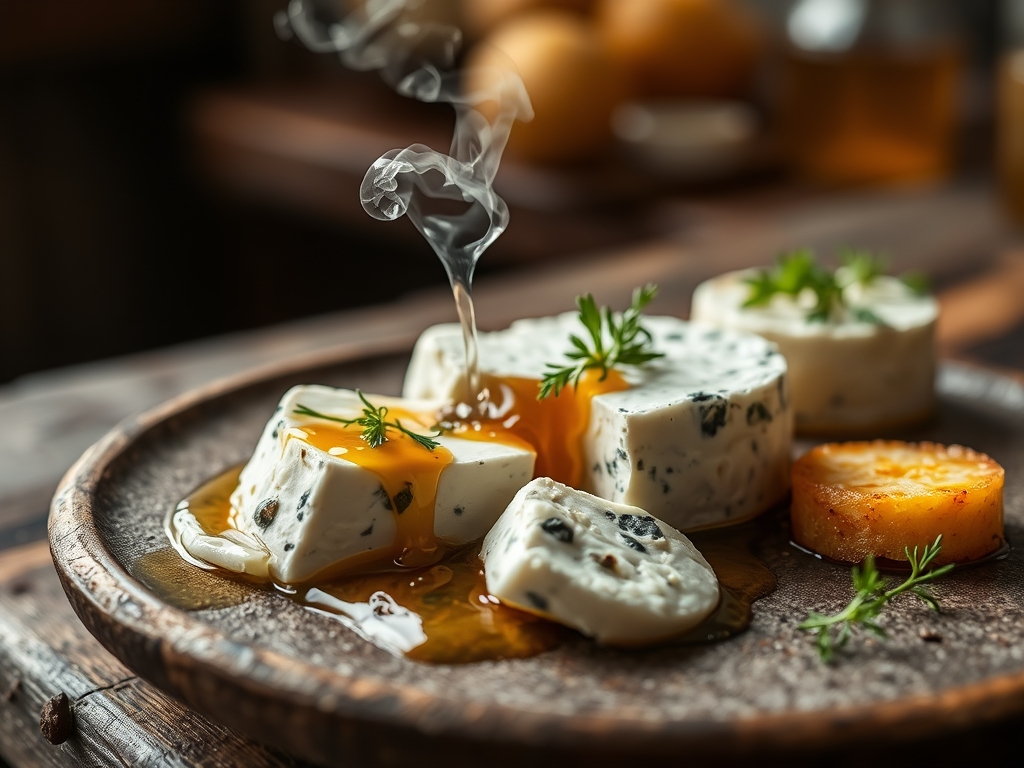
Referencing the Masterclass photo, notice the specific "weeping" effect where the honey meets the cheese. If your honey is sliding off the cheese entirely, the cheese surface may be too oily. Blot the cheese gently with a lint-free cloth before drizzling. If the color of your dish looks dull, you likely skipped the fresh herbs. The green of the thyme provides a necessary visual contrast to the pale blue and amber tones. If the cheese looks gray rather than white and blue, it has been exposed to too much oxygen; always store blue cheese in parchment paper followed by foil to maintain the correct moisture-to-oxygen ratio.
THE DEEP DIVE
Macro Nutrition Profile:
This dish is a powerhouse of fats and sugars. A single serving provides approximately 350 calories, with 18g of fat, 42g of carbohydrates, and 12g of protein. The blue cheese offers a significant dose of calcium and vitamin B12, while the raw honey contains antioxidants and trace enzymes.
Dietary Swaps:
- Vegan: Substitute the blue cheese with a cultured cashew-based "blue" crumble. Swap the honey for a thick agave nectar or a vegan "honee" made from apple juice reduction.
- Keto: Replace the sourdough with toasted almond flour bread or serve the cheese and honey (in moderation) on celery stalks. Use a sugar-free honey substitute.
- GF: Utilize a high-quality gluten-free seeded loaf to maintain the necessary structural integrity.
Meal Prep & Reheating Science:
This dish does not reheat well once assembled. The bread will become soggy as it absorbs the honey. However, you can prep the components. Slice the cheese and store in an airtight container. Toast the nuts and keep them in a dry pantry. When ready to serve, toast the bread fresh. If you must reheat a pre-assembled slice, use an air fryer at 175 degrees Celsius for 2 minutes to crisp the edges without liquefying the cheese.
THE KITCHEN TABLE
Which blue cheese is best for beginners?
Gorgonzola Dolce is the ideal entry point. It is creamier, sweeter, and less aggressive than Roquefort or Stilton. Its higher moisture content allows it to blend seamlessly with the honey for a smoother, more approachable flavor profile.
Can I use flavored honey?
Absolutely. Truffle honey adds an incredible earthy dimension that complements the mold in the cheese. Hot honey (infused with chili) adds a capsaicin kick that cuts through the heavy dairy fats brilliantly. Just ensure the honey is high quality.
Why does my blue cheese crumble instead of spreading?
This is a result of the cheese being too cold or having a low moisture content. To fix this, mash the cheese with a fork and mix in a teaspoon of room-temperature heavy cream to create a spreadable paste.
How do I store leftover honey-drizzled cheese?
Storage is not recommended once the honey is applied. The osmotic pressure of the sugar will draw moisture out of the cheese, resulting in a watery mess. It is better to store the components separately and assemble per serving.