The scent of smoldering hickory is not just a perfume; it is a chemical signal that the battle for the perfect crust has begun. When you apply a dry rub to a massive slab of brisket or a rack of ribs, you are not merely seasoning meat. You are engineering a complex, semi-permeable membrane designed to manage moisture migration and catalyze the Maillard reaction. This is the realm of BBQ Rub Equilibrium. It is the precise point where the osmotic pressure of sodium, the hygroscopic nature of sucrose, and the volatile oils of capsicum achieve total synergy. If your rub is too salty, the proteins denature into a rubbery mess. If it is too sweet, the sugars carbonize into a bitter, acrid shell before the fat can even begin to render. To master the pit, you must move beyond the "pinch of this" mentality and embrace the rigorous standards of a culinary audit. We are here to balance the scales of flavor and heat.
THE DATA MATRIX
| Metric | Specification |
|---|---|
| Prep Time | 15 Minutes |
| Execution Time | 5 Minutes (Mixing) |
| Yield | 450g / 1.9 Cups |
| Complexity (1-10) | 3 |
| Estimated Cost per Serving | $0.42 |
THE GATHERS
Ingredient Protocol:
- 120g / 0.5 cup Coarse Kosher Salt (Diamond Crystal preferred)
- 100g / 0.5 cup Dark Muscovado or Brown Sugar
- 40g / 5 tbsp Smoked Spanish Paprika (Pimenton)
- 30g / 4 tbsp Coarsely Cracked Black Peppercorns (16-mesh)
- 15g / 2 tbsp Granulated Garlic
- 15g / 2 tbsp Granulated Onion
- 10g / 1.5 tbsp Chipotle Chili Powder
- 5g / 1 tsp Ground Mustard Seed
- 2g / 0.5 tsp Celery Seed
Section A: Ingredient Quality Audit:
The most common failure in a rub profile is the use of "dusty" spices. If your garlic powder has clumped into a tectonic plate, its volatile compounds have evaporated. Pro Tip: Always source whole peppercorns and crack them yourself using a burr grinder or heavy mallet to ensure the piperine levels are at their peak. If your brown sugar is bone-dry, it will not distribute evenly. To fix this, place the sugar in a bowl with a damp paper towel for ten minutes to rehydrate the molasses content before mixing. Finally, ensure your salt is coarse. Table salt has a much higher density per volume; using it in a 1:1 ratio with kosher salt will result in a sodium spike that ruins the BBQ Rub Equilibrium.
THE MASTERCLASS
1. Precision Calibration and Sifting
Begin by placing your digital scale on a flat, level surface. Weigh each ingredient individually rather than relying on volumetric spoons. Once weighed, pass the granulated garlic, onion, and paprika through a fine-mesh sieve into a large stainless steel mixing bowl.
Pro Tip: Sifting prevents the formation of "flavor pockets" where a diner might bite into a concentrated clump of bitter mustard or acrid garlic. Using a digital scale ensures that your heat-to-sweet ratio remains consistent across every batch you produce.
2. Achieving Homogeneous Distribution
Use a balloon whisk or a bench scraper to aggressively move the ingredients from the edges of the bowl toward the center. You are looking for a uniform color spectrum. The dark flecks of pepper should be evenly suspended within the red hue of the paprika and the golden crystals of the sugar.
Pro Tip: The goal here is to aerate the mixture. Aeration prevents the hygroscopic sugar from bonding with the salt prematurely, which allows the rub to flow freely from a shaker bottle rather than exiting in awkward, uneven clumps.
3. Surface Tension and Application
Before applying the rub to the protein, pat the meat dry with lint-free towels. Apply a very thin film of neutral oil or yellow mustard as a binder. Hold your hand approximately twelve inches above the meat and shake the rub in a sweeping motion to ensure total coverage without "caking."
Pro Tip: This height allows the particles to reach terminal velocity and distribute evenly across the surface. A saucier or specialized shaker bottle with large perforations is the professional tool of choice here to maintain a consistent flow rate.
Section B: Prep & Timing Fault-Lines:
Timing is the silent killer of bark. If you apply a high-salt rub too early (more than 12 hours before cooking), the salt will draw out too much moisture, resulting in a wet slurry that prevents the bark from setting. Conversely, applying it seconds before the meat hits the smoker doesn't allow the salt to penetrate the muscle fibers. The "Goldilocks Zone" for BBQ Rub Equilibrium is typically 45 to 60 minutes before the cook. This allows the salt to dissolve into the surface moisture and then be reabsorbed, carrying the spice flavors into the top few millimeters of the protein.
THE VISUAL SPECTRUM
Section C: Thermal & Visual Troubleshooting:
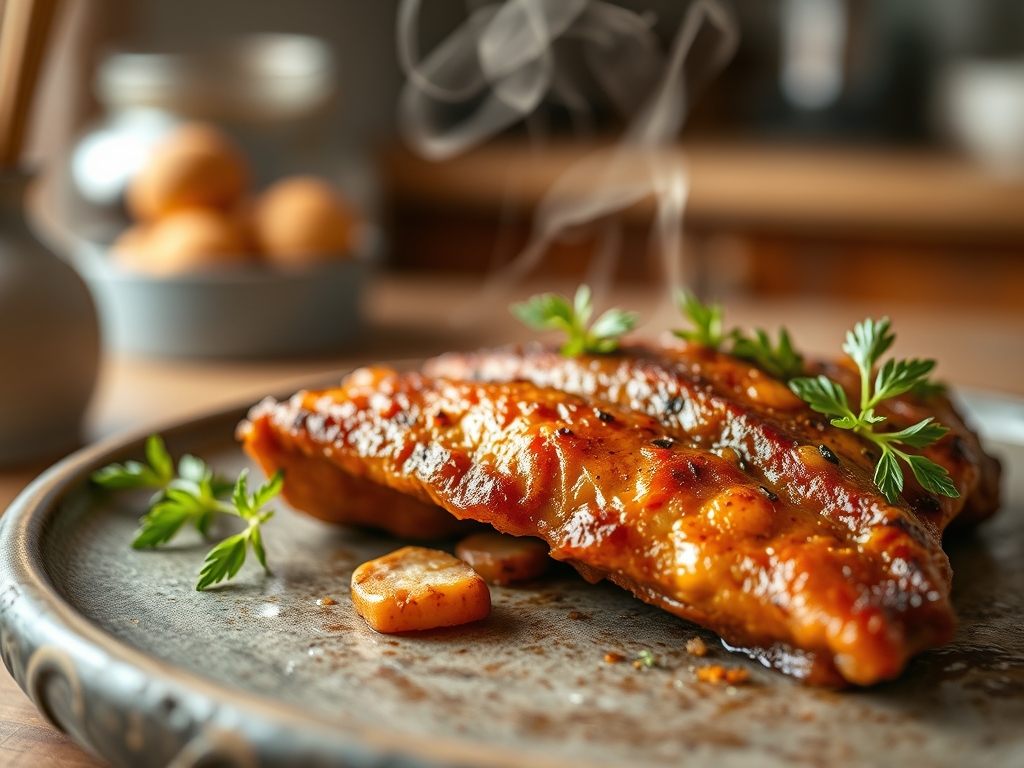
Referencing the Masterclass photo above, notice the deep mahogany hue and the "pebbled" texture of the crust. If your meat looks pale or grey, you have a humidity problem; the meat is steaming rather than roasting. Open the dampers on your smoker to increase airflow. If the rub looks black and smells like burnt toast, your sugar content is too high for the temperature you are running.
If the color is dull, your paprika is likely oxidized. High-quality pimenton should provide a vibrant, brick-red glow. If you see "bald spots" where the rub has slid off, you likely skipped the drying step or used too much binder. The ideal visual cue is a matte finish that begins to glisten as the fat starts to render and mix with the spices.
THE DEEP DIVE
Macro Nutrition Profile
Per 15g serving: Calories: 45 | Carbohydrates: 9g | Sodium: 1,150mg | Fat: 0.5g | Protein: 0.5g. The primary caloric driver is the sucrose, which is essential for the crust but should be monitored for those on strict diets.
Dietary Swaps
- Vegan: This rub is naturally vegan. Ensure your sugar is certified bone-char free.
- Keto: Replace the brown sugar with an erythritol-based monk fruit sweetener. Note that the caramelization point will change, so monitor the bark closely.
- Gluten-Free: Ensure your spices are not processed in a facility that handles wheat, as some anti-caking agents contain gluten.
Meal Prep & Reheating Science
To maintain the molecular structure of the bark during reheating, avoid the microwave. The rapid agitation of water molecules will turn your crisp crust into a soggy film. Instead, wrap the meat in foil with a teaspoon of liquid and heat in an oven at 250F. This creates a gentle steam environment that hydrates the interior without dissolving the exterior spice matrix.
THE KITCHEN TABLE
Why does my rub turn into a hard brick in the jar?
This is caused by humidity. The sugar absorbs moisture from the air and forms crystalline bridges with the salt. Store your rub in an airtight container with a food-grade desiccant packet to maintain a free-flowing texture.
Can I use white sugar instead of brown sugar?
You can, but you will lose the complex notes of molasses. White sugar also has a higher combustion point, meaning it won't develop that deep, dark mahogany color as quickly as muscovado or dark brown sugar.
What is the purpose of the mustard seed?
Mustard seed contains mucilage which, when hydrated, acts as a natural emulsifier. This helps the fats and juices of the meat bind with the dry spices, creating a more cohesive and durable bark during the long smoking process.
Why is my rub too spicy even though I followed the recipe?
Capsaicin levels vary wildly between brands of chili powder. Always perform a "micro-taste" of your chili powder before mixing. If it is exceptionally piquant, reduce the volume by twenty percent to maintain the BBQ Rub Equilibrium.