Welcome to the high stakes arena of sucrose engineering where the margin between a translucent masterpiece and a scorched disaster is measured in mere degrees Celsius. We are not just making sweets; we are manipulating the very molecular architecture of carbohydrates to achieve the perfect transition from Hot Syrup to Brittle. This is a phase shift that demands absolute precision and a disregard for the safety of your fingertips. Imagine a molten, viscous river of sugar, bubbling at a violent 300 degrees Fahrenheit, suddenly suspended in time to become a glass-like solid that shatters with a satisfying acoustic snap. This process requires more than a recipe; it requires a structural audit of your kitchen infrastructure. We are hunting for that elusive hard crack stage where the moisture content drops below one percent and the sugar molecules lock into a rigid, non crystalline lattice. If you fail to respect the thermodynamics of the boil, you end up with a sticky, tooth pulling mess. If you master the heat, you create an edible diamond. Let us begin the audit.
THE DATA MATRIX
| Metric | Specification |
|---|---|
| Prep Time | 15 Minutes |
| Execution Time | 45 Minutes |
| Yield | 1.5 Kilograms / 3.3 Pounds |
| Complexity (1-10) | 8 |
| Estimated Cost per Serving | $0.22 |
THE GATHERS
Ingredient Protocol:
- Granulated White Sugar: 600g / 3 cups
- Light Corn Syrup: 240ml / 1 cup
- Filtered Water: 120ml / 0.5 cup
- Unsalted High Fat Butter: 60g / 4 tablespoons
- Baking Soda (Sodium Bicarbonate): 10g / 2 teaspoons
- Pure Vanilla Extract: 10ml / 2 teaspoons
- Raw Spanish Peanuts: 450g / 3 cups
- Flaky Sea Salt: 5g / 1 teaspoon
Section A: Ingredient Quality Audit:
The primary failure point in the Hot Syrup to Brittle transition is often the sugar itself. If your granulated sugar has absorbed ambient humidity, it will clump and promote premature crystallization. Solution: Sift your sugar before use to ensure a uniform surface area for dissolution. Furthermore, using "table syrup" instead of high quality light corn syrup introduces unpredictable impurities. Corn syrup acts as an interference agent that prevents sugar crystals from bonding too early. If your syrup is cloudy, discard it. Finally, ensure your baking soda is fresh; an expired leavening agent will fail to aerate the mixture, leaving you with a dense, rock hard slab rather than a light, honeycomb structure.
THE MASTERCLASS
Step-by-Step Execution:
1. Thermal Foundation and Dissolution
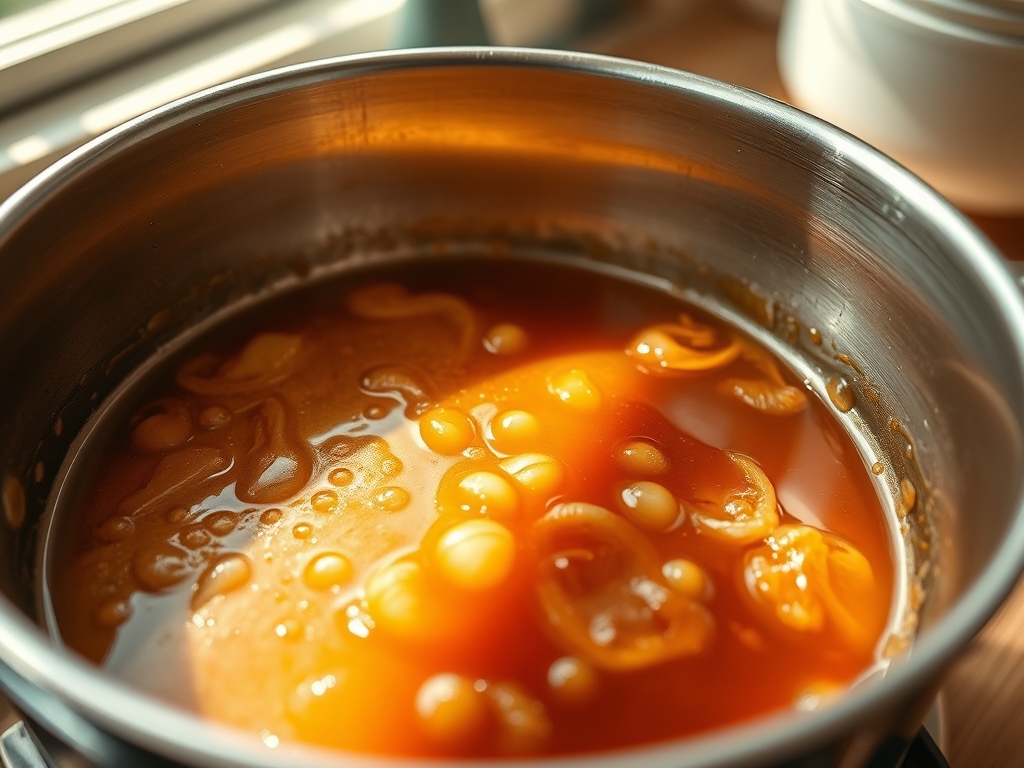
Place your heavy bottomed stainless steel saucier on a digital scale to tare your measurements. Combine the sugar, corn syrup, and water. Stir over medium heat until the granules are fully dissolved and the liquid is clear. Use a wet pastry brush to wash down any stray crystals from the sides of the pan to prevent a chain reaction of crystallization.
Pro Tip: Utilizing a heavy saucier ensures even heat distribution, preventing "hot spots" that can scorch the sugar before it reaches the target temperature. Professional chefs rely on the curved bottom of the saucier to eliminate dead zones where sugar might trap and burn.
2. The Hard Crack Ascent
Increase the heat and insert a calibrated digital thermometer. Monitor the mixture as it reaches 280 degrees Fahrenheit (138 degrees Celsius). At this point, the syrup is entering the soft crack stage. Do not leave the station; the temperature will climb rapidly once the water has evaporated.
Pro Tip: This is the stage where the viscosity of the syrup increases exponentially. A digital thermometer is superior to analog versions because it provides real time data without the lag of mercury expansion, which is critical when every second counts.
3. Protein Infusion and Maillard Initiation
Once the thermometer hits 280 degrees Fahrenheit, add the raw peanuts and the butter. Stir constantly with a high heat silicone spatula. The peanuts will begin to roast within the syrup, and the butter will render and emulsify, creating a rich mouthfeel. Continue cooking until the mixture reaches exactly 300 degrees Fahrenheit (149 degrees Celsius).
Pro Tip: Adding the nuts at this specific window allows them to roast in the residual heat of the syrup. This triggers the Maillard reaction, where proteins and sugars react to create deep, piquant flavors that are impossible to achieve with pre roasted nuts.
4. Aeration and Chemical Expansion
Immediately remove the saucier from the heat source. Quickly whisk in the vanilla extract and the baking soda. The mixture will foam violently and expand as the sodium bicarbonate releases carbon dioxide into the viscous syrup. This is the most critical five seconds of the entire process.
Pro Tip: The baking soda creates tiny air pockets that are "frozen" in place as the sugar cools. This aeration is what makes the brittle "brittle" rather than just a hard candy, allowing it to shatter easily when bitten.
5. The Structural Set
Pour the foaming mass onto a pre greased marble slab or a silicone mat lined baking sheet. Use a metal bench scraper to spread the mixture as thin as possible before it loses its plasticity. Sprinkle the flaky sea salt over the top while the surface is still tacky.
Pro Tip: A professional bench scraper allows for rapid, even spreading, which is essential because the transition from Hot Syrup to Brittle happens in less than sixty seconds once the mixture hits the cool surface.
Section B: Prep & Timing Fault-Lines:
The most common human error is the "Panic Pour." If you pour the mixture before it reaches 300 degrees Fahrenheit, the brittle will be chewy and stick to the teeth. If you wait until 310 degrees, the sugar will polymerize and taste bitter. To fix timing issues, always have your cooling station fully prepped before you even turn on the stove. If the mixture sets too fast in the pan, you cannot reheat it without destroying the delicate aeration. Speed is your only ally here.
THE VISUAL SPECTRUM
Section C: Thermal & Visual Troubleshooting:
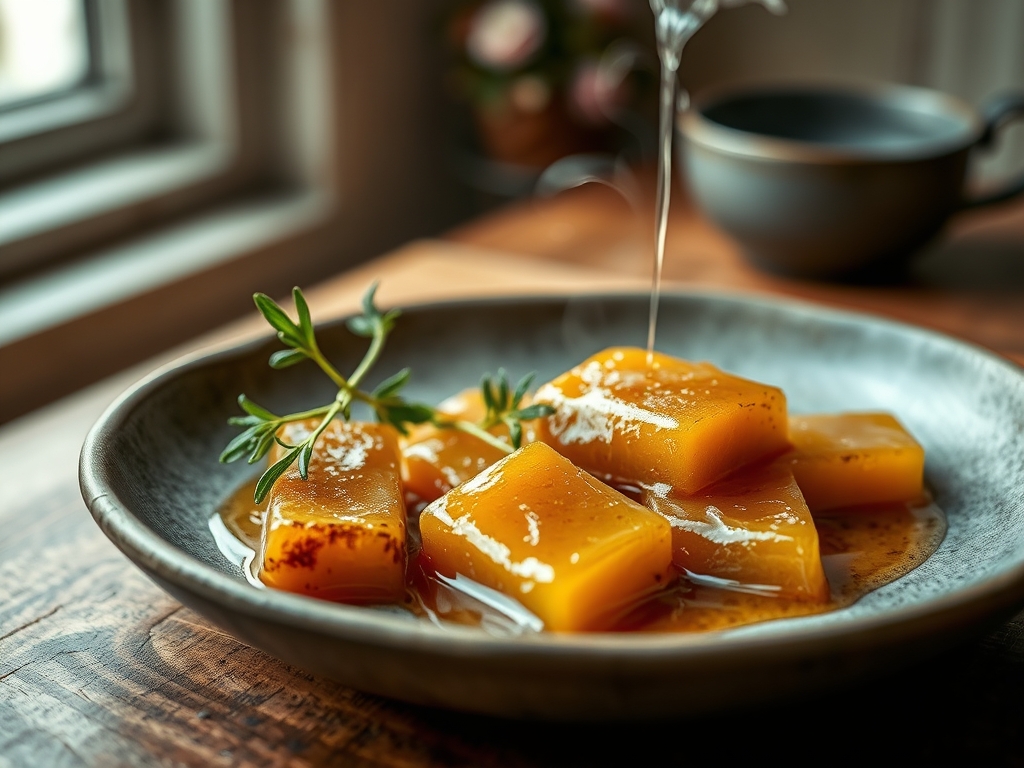
Observe the photo above; the ideal brittle should possess a deep amber hue, similar to polished mahogany. If your brittle is pale yellow, you pulled it too early, and it will lack the complex toasted notes of a true hard crack candy. If the surface is dull rather than glossy, you likely over stirred the mixture during the final cooling phase, causing micro crystallization. Note the "bubbles" visible in the cross section of the image; these should be uniform and small. Large, uneven voids indicate that the baking soda was not whisked in thoroughly. If you see dark flecks that are not peanuts, those are carbonized sugar particles, meaning your heat was too high during the initial boil.
THE DEEP DIVE
- Macro Nutrition Profile: This is a high energy, carbohydrate dense infrastructure. Per 50g serving: 240 Calories, 12g Fat, 32g Carbohydrates (28g Sugars), 4g Protein.
- Dietary Swaps: For a Vegan version, substitute the butter with a high fat coconut oil or vegan buttery spread. For a Keto version, use an Allulose based sweetener, though the cooling time and "snap" will differ significantly due to different molecular bonding. This recipe is naturally Gluten Free.
- Meal Prep & Reheating Science: Do not attempt to reheat brittle. To maintain the molecular structure, store in an airtight container with a desiccant pack. Moisture is the enemy; even a small amount of humidity will cause the sugar to deliquesce, turning your brittle back into a sticky syrup.
THE KITCHEN TABLE
Why is my brittle so sticky?
The syrup likely failed to reach the 300 degree "hard crack" threshold. Without reaching this temperature, enough water remains in the mixture to keep the sugar in a flexible, tacky state rather than a brittle glass.
Can I use honey instead of corn syrup?
Honey contains fructose, which browns much faster than glucose. If you substitute honey, you must lower your final target temperature by 10 degrees to avoid burning the sugars and creating a bitter profile.
How do I clean the hardened sugar off my pan?
Fill the saucier with water and bring it to a boil. The heat will break the molecular bonds of the hardened sugar, allowing it to dissolve back into the water for easy disposal.
Why did my peanuts stay raw?
You likely added the peanuts too late in the process. They need the full climb from 280 to 300 degrees to properly roast within the molten sugar matrix and develop their flavor.