Listen up, kitchen operatives. We are moving beyond the realm of casual home cooking and entering the high-stakes theater of protein architecture. When you approach a Stuffed Flank Steak, you aren't just making dinner; you are managing a complex structural integrity project involving long-grain muscle fibers and thermal expansion variables. The flank is a hardworking muscle, lean and fibrous, demanding a strategic intervention to prevent it from transforming into a sheet of vulcanized rubber. By butterfly-cutting this specific cut, we increase the surface area for the Maillard reaction while simultaneously introducing a moisture-rich internal core. This is where the magic happens. We are talking about a high-velocity infusion of aromatics, fats, and acids that penetrate the grain as the heat forces the protein coils to tighten and relax. If you fail to respect the geometry of the roll, you end up with a structural collapse. If you master it, you produce a cross-section of culinary perfection that looks as sharp as a CAD drawing and tastes like a five-star executive suite.
THE DATA MATRIX
| Metric | Specification |
|---|---|
| Prep Time | 45 Minutes |
| Execution Time | 35 Minutes |
| Yield | 4-6 Servings |
| Complexity | 7/10 |
| Estimated Cost per Serving | $8.50 – $12.00 |
THE GATHERS
Ingredient Protocol:
- 900g / 2 lbs Flank Steak (trimmed of excess silver skin)
- 150g / 2 cups Fresh Baby Spinach (tightly packed)
- 100g / 1/2 cup Sun-dried tomatoes in oil (drained and chopped)
- 120g / 1 cup Feta or Goat Cheese (crumbled)
- 45ml / 3 tbsp Extra Virgin Olive Oil
- 4 cloves Garlic (microplaned or finely minced)
- 5g / 1 tsp Smoked Paprika
- 10g / 2 tsp Kosher Salt
- 5g / 1 tsp Coarse Black Pepper
- 120ml / 1/2 cup Dry Red Wine (for deglazing)
- 30g / 2 tbsp Unsalted Butter (cold, for emulsification)
Section A: Ingredient Quality Audit:
If your flank steak arrives with excessive connective tissue, do not panic. Use a sharp boning knife to remove the silver skin; this elastin does not render and will create a chewy, unpleasant mouthfeel. If the spinach appears wilted or lacks that viscous snap, flash-shock it in an ice bath for three minutes to restore turgor pressure. For sub-par sun-dried tomatoes that feel like leather, soak them in 50ml of warm balsamic vinegar for ten minutes to infuse them with moisture and a piquant acidity. If your cheese is too watery, press it between paper towels using a heavy cast-iron press to ensure it doesn't leak excess moisture into the steak during the thermal cycle, which would steam the meat from the inside out.
THE MASTERCLASS
1. The Butterfly Maneuver
Lay the steak flat on a heavy-duty poly-board. Using a sharp slicing knife, cut the steak in half horizontally against the grain, stopping about one centimeter from the edge. Open it like a book. Use a meat mallet to pound the meat to a uniform thickness of 1.5 centimeters.
Pro Tip: Use a digital scale to weigh the meat before and after trimming. Uniform thickness is the only way to ensure a consistent thermal gradient across the entire protein surface.
2. The Aromatic Layering
Rub the interior surface with olive oil, garlic, and spices. Layer the spinach, sun-dried tomatoes, and cheese evenly, leaving a two-centimeter border at the edges to prevent "filling migration" during the rolling process.
Pro Tip: A bench scraper is the perfect tool for gathering finely chopped aromatics and transferring them to the steak surface without losing essential oils on the cutting board.
3. The Structural Roll and Secure
Roll the steak tightly, starting from the long end, keeping the grain running parallel to the roll. Secure the cylinder with butcher's twine every three centimeters. Ensure the tension is firm but not so tight that it cuts through the muscle fibers.
Pro Tip: Use the "surgical knot" technique with your twine. This maintains tension while you loop the string, ensuring the molecular structure of the roll stays intact during searing.
4. The High-Heat Sear
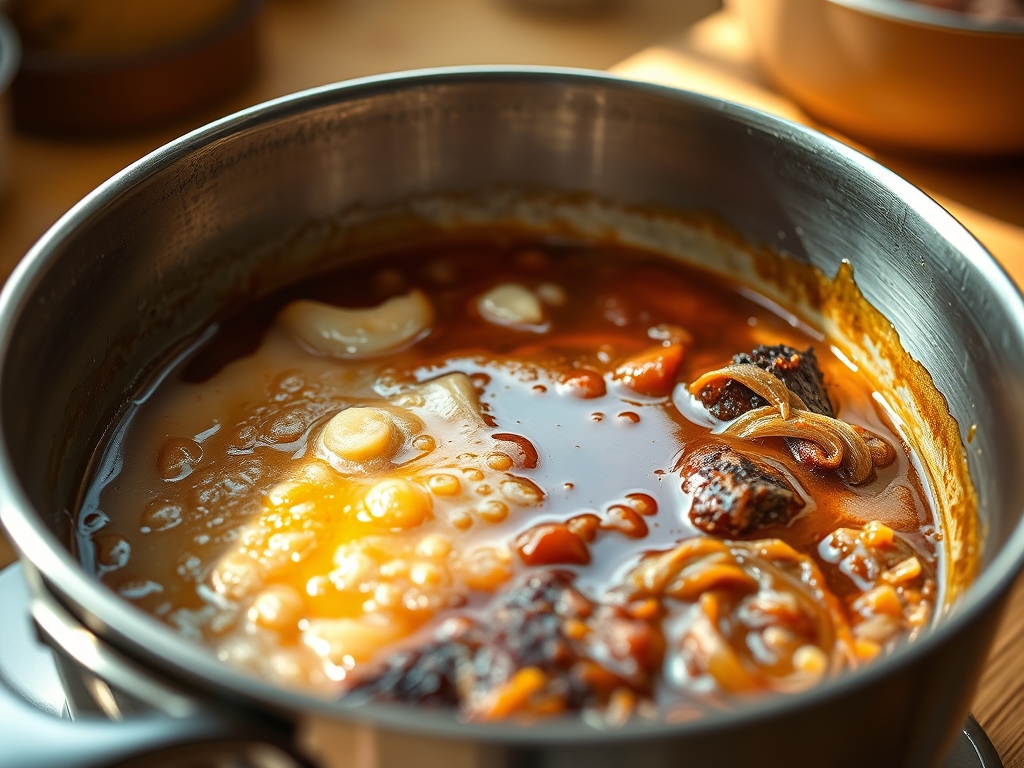
Heat a heavy stainless steel skillet or cast-iron pan over medium-high heat. Add oil and sear the roll on all sides until a deep, mahogany crust forms. This is the Maillard reaction in full effect.
Pro Tip: Use a saucier or a heavy pan with sloped sides. This allows for better airflow and easier access when turning the meat with heavy-duty kitchen tongs.
5. Thermal Finalization
Transfer the pan to a preheated oven at 200C / 400F. Roast until the internal temperature reaches 54C / 130F for a perfect medium-rare. Remove and let the meat rest for at least ten minutes.
Pro Tip: Use a digital probe thermometer set to alert you two degrees before your target temperature. Carry-over cooking will bridge the final gap while the juices redistribute.
6. The Pan Sauce Deglaze
While the meat rests, place the skillet back on the hob. Pour in the red wine to deglaze, scraping up the fond. Whisk in cold butter to aerate and thicken the sauce into a glossy, viscous glaze.
Pro Tip: A flat whisk is superior here for reaching the corners of the pan and ensuring every bit of caramelized protein is integrated into the sauce.
Section B: Prep & Timing Fault-Lines:
The most common failure in this protocol is the "cold core" syndrome. If you take the steak directly from the refrigerator to the pan, the exterior will overcook before the center reaches a safe temperature. Allow the meat to temper at room temperature for 30 minutes. Another fault-line is the "rushed rest." If you slice the steak immediately, the internal pressure will force all the moisture out, leaving you with a dry, gray result. Patience is a technical requirement, not a suggestion.
THE VISUAL SPECTRUM
Section C: Thermal & Visual Troubleshooting:
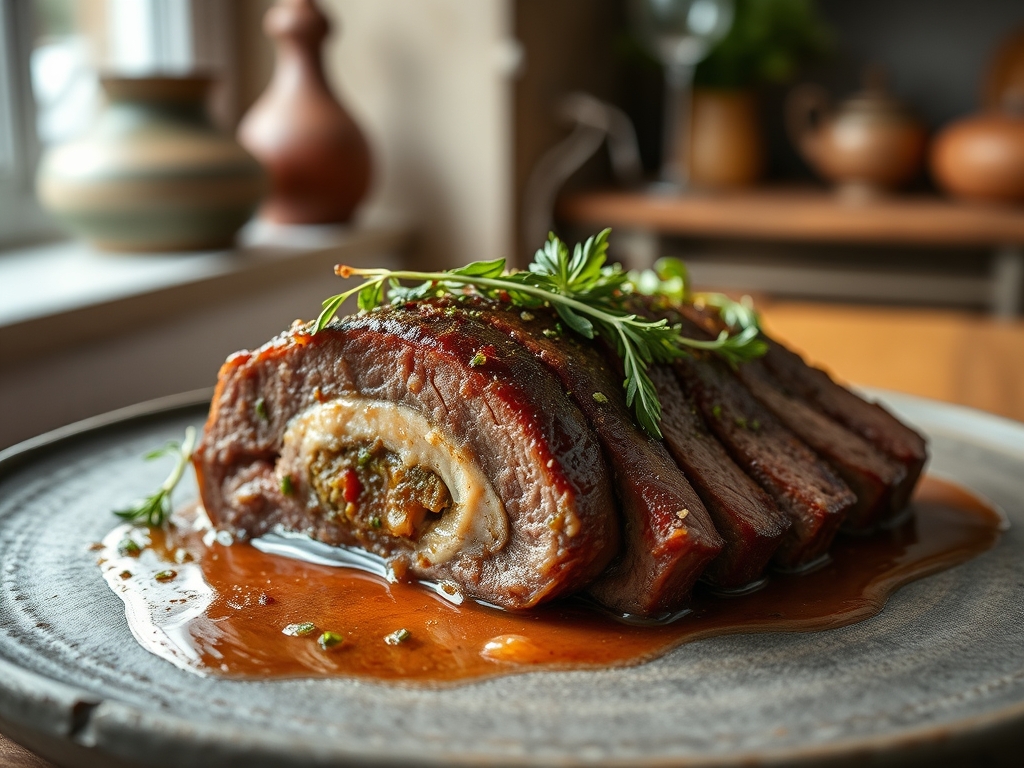
Referencing the Masterclass photo, look for the "bullseye" effect. If your spinach looks brown and muddy rather than vibrant green, you have over-extended the thermal cycle. If the cheese has completely vanished, it likely melted and leaked out because the roll wasn't secured tightly enough. Uneven browning usually indicates a crowded pan or insufficient initial heat; the meat should sizzle aggressively the moment it makes contact. If the exterior looks dull, your final deglaze and butter-baste were likely skipped. A perfect Stuffed Flank Steak should exhibit a glossy sheen and a distinct contrast between the dark crust and the colorful interior layers.
THE DEEP DIVE
Macro Nutrition Profile
Per serving (approx 200g): 380 Calories, 42g Protein, 22g Fat, 4g Net Carbs. This is a high-density protein fuel source designed for muscle recovery and metabolic efficiency.
Dietary Swaps
- Vegan: Replace the flank with a large, marinated Portobello mushroom "slab" and use cashew-based "feta" and a walnut-sundried tomato filling.
- Keto: This recipe is naturally keto-compliant. Ensure the sun-dried tomatoes have no added sugars in the oil.
- GF: The recipe is naturally gluten-free; just ensure your red wine is a dry variety with no additives.
Meal Prep & Reheating Science
To maintain the molecular structure when reheating, avoid the microwave at all costs. The microwave agitates water molecules, which steams the meat and turns it rubbery. Instead, slice the steak cold and flash-sear the slices in a hot pan for 60 seconds per side. This restores the crust while keeping the center tender.
THE KITCHEN TABLE
Why is my flank steak always tough?
You are likely cutting with the grain. Always slice perpendicular to the muscle fibers. This shortens the protein strands, making the meat significantly easier to masticate and improving the overall texture of the Stuffed Flank Steak.
Can I use a different cheese?
Absolutely. While feta offers a sharp, piquant contrast, provolone or mozzarella provide a superior "melt factor." Just ensure the cheese has a low moisture content to prevent the internal steaming effect mentioned in the quality audit.
What if I don't have butcher's twine?
In a tactical pinch, use wooden toothpicks soaked in water for 20 minutes. Insert them at an angle across the seam. However, twine provides superior compression, which is essential for a uniform cook and professional presentation.
How do I get that perfect sear?
Pat the meat bone-dry with paper towels before seasoning. Moisture is the enemy of the Maillard reaction. If the surface is wet, the energy goes into evaporating water rather than browning the proteins.