Listen up, culinary engineers. We are not here to bake a meatloaf in a blanket; we are here to execute a high-stakes structural audit on the king of the pastry-wrapped proteins. The Beef Wellington is a masterpiece of moisture management. It is a three-tier defense system designed to protect a pristine cylinder of beef from the encroaching humidity of its own juices. If your pastry is weeping, your infrastructure has failed. If your duxelles is a swamp, your foundation is compromised. This Beef Wellington Audit is your blueprint for a flawless, medium-rare core encased in a shatteringly crisp, golden-brown exoskeleton. We are talking about the delicate interplay between the Maillard reaction on the sear and the steam-suppression of the crepe layer. Every component must be calibrated. Every layer must be airtight. We are building a fortress of flavor, and there is zero tolerance for a soggy bottom. Grab your digital thermometers and sharpen your knives; it is time to inspect the most prestigious architectural feat in the kitchen.
THE DATA MATRIX
| Metric | Specification |
|---|---|
| Prep Time | 90 Minutes |
| Execution Time | 45 Minutes |
| Yield | 4 to 6 Servings |
| Complexity (1-10) | 9 (Structural Integrity Critical) |
| Estimated Cost per Serving | $18.00 – $25.00 |
THE GATHERS
Ingredient Protocol:
- 900g / 2 lb Center-cut Beef Tenderloin (Chateaubriand)
- 500g / 1.1 lb Cremini or Button Mushrooms
- 100g / 3.5 oz Prosciutto di Parma (thinly sliced)
- 250ml / 1 cup Dry White Wine (for deglazing)
- 2 Large Eggs (for egg wash)
- 500g / 1.1 lb High-Butterfat Puff Pastry (chilled)
- 30ml / 2 tbsp English Mustard
- 15ml / 1 tbsp Grapeseed Oil (high smoke point)
- 2 Sprigs Fresh Thyme (leaves only)
- 10g / 2 tsp Flaky Sea Salt
Section A: Ingredient Quality Audit:
The primary failure point in a Wellington is often the mushroom duxelles. If your mushrooms are bruised or overly saturated with water, they will not render their moisture properly; this leads to a "leak" that destroys the pastry. Technical Fix: Use a food processor to pulse mushrooms into a fine crumb, then sauté in a wide saucier until they are bone-dry. If the beef lacks a consistent diameter, the cook will be uneven. Technical Fix: Use butcher's twine to tie the tenderloin into a uniform cylinder before searing; this ensures the thermal energy travels at a consistent rate to the geometric center.
THE MASTERCLASS
1. The Sear and Seal
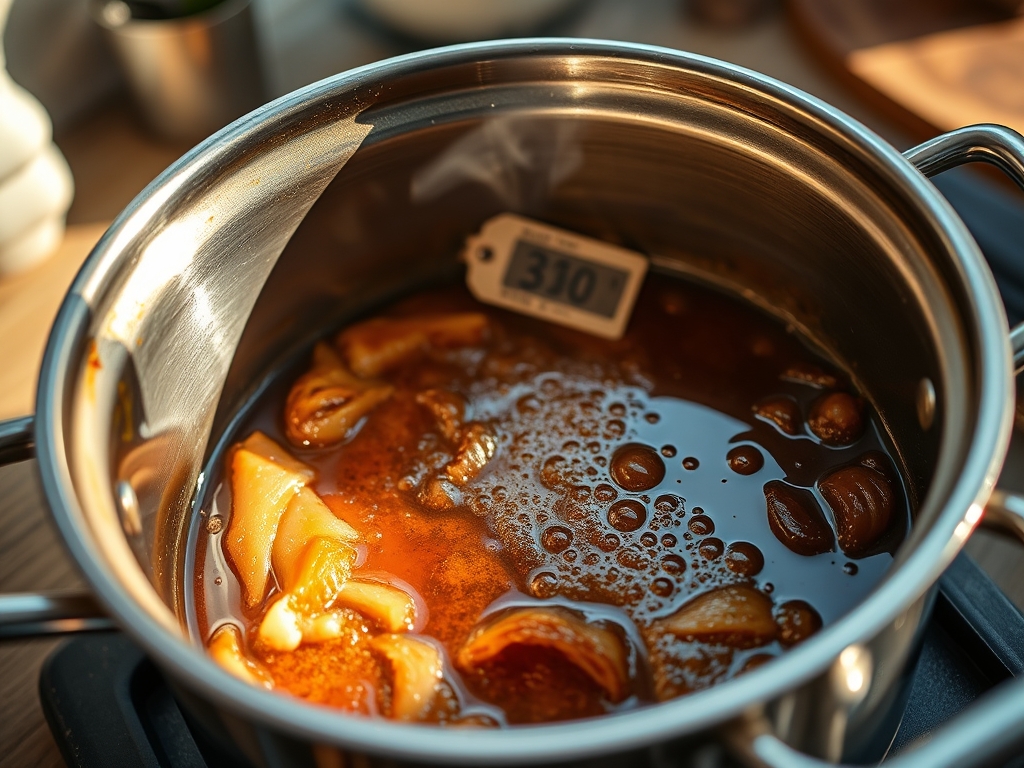
Season the beef aggressively with salt and pepper. Heat your grapeseed oil in a heavy-bottomed skillet until it reaches the smoke point. Sear the tenderloin for no more than 60 seconds per side to achieve a deep Maillard crust without cooking the interior. Immediately remove and brush with English Mustard while hot.
Pro Tip: The heat from the beef allows the mustard to infuse the outer fibers of the meat, creating a piquant chemical barrier. Use a digital scale to ensure even seasoning distribution across the entire surface area.
2. Duxelles Dehydration
Finely mince the mushrooms and sauté with thyme in a dry pan. Once they release their liquid, add the white wine to deglaze the pan. Continue cooking until the mixture is a thick, viscous paste with no visible standing liquid.
Pro Tip: Moisture is the enemy of the puff pastry. If you can squeeze the mixture and see water, keep cooking. Use a silicone spatula to "trail" the pan; if the path fills with liquid instantly, the audit fails.
3. The Prosciutto Barrier
Lay a sheet of plastic wrap on your workstation. Arrange the prosciutto slices in an overlapping rectangle. Spread the cooled mushroom duxelles evenly over the ham. Place the beef at one end and use the plastic wrap to roll it into a tight, cigar-shaped log. Chill for 30 minutes.
Pro Tip: The prosciutto acts as a moisture-wicking membrane. It prevents the mushroom juices from migrating into the pastry. Ensure the roll is tight by using a bench scraper to tuck the edges as you rotate.
4. Pastry Architecture
Roll out the chilled puff pastry on a floured surface. Unwrap the beef log and place it in the center. Brush the edges with egg wash. Roll the pastry over the beef, trimming any excess to avoid thick, doughy seams. Seal the ends and wrap tightly in plastic again to set the shape.
Pro Tip: Over-handling the pastry will melt the butter layers, ruining the lamination. Work quickly and keep the dough at 40 degrees Fahrenheit. A bench scraper is essential here for clean, sharp cuts.
5. The Final Thermal Phase
Score the top of the pastry with a sharp knife (do not pierce the meat). Brush with a heavy layer of egg wash to ensure a deep gold finish. Bake at 200C / 400F until the internal temperature reaches 52C / 125F for a perfect medium-rare.
Pro Tip: Use a probe thermometer. Relying on "time" is a rookie mistake in a high-stakes audit. The pastry should be puffed and rigid, indicating the steam has aerated the layers effectively.
Section B: Prep & Timing Fault-Lines:
The most common human error is rushing the cooling stages. If you wrap hot beef in cold pastry, the butter melts instantly, and you get a "slumping" effect. Technical Fix: The beef must be completely cold before it touches the pastry. Another fault-line is the "Soggy Bottom" syndrome. Technical Fix: Place the Wellington on a pre-heated baking stone or a heavy-duty perforated tray to ensure immediate heat transfer to the base.
THE VISUAL SPECTRUM
Section C: Thermal & Visual Troubleshooting:
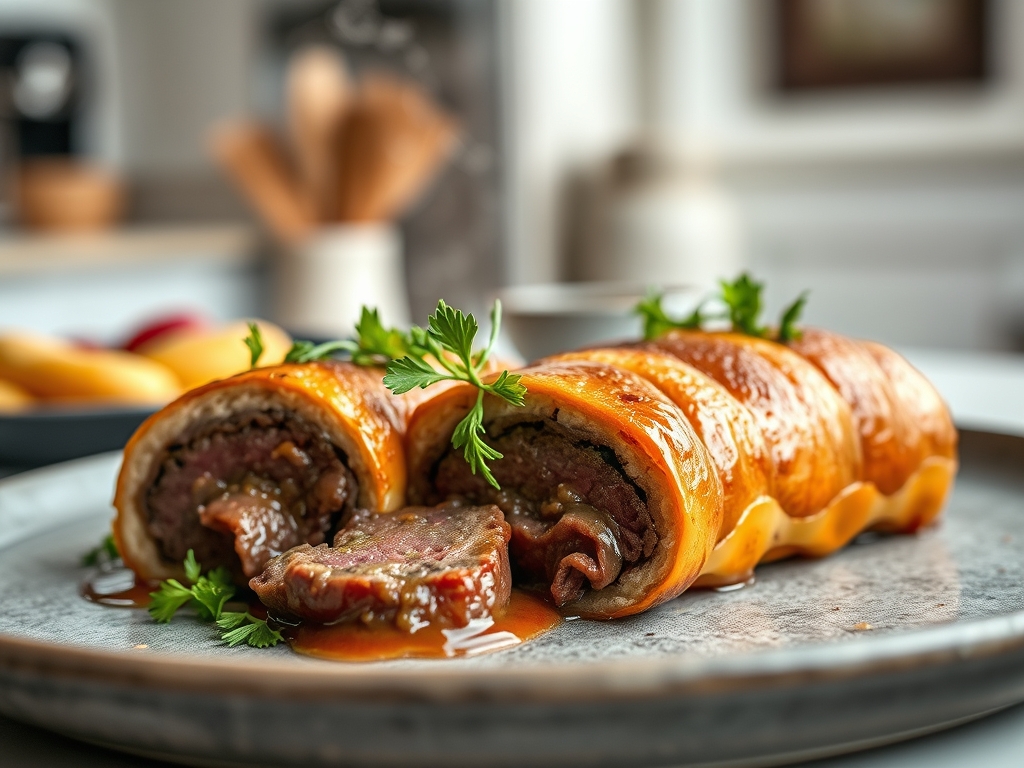
Referencing our Masterclass photo, notice the deep, mahogany sheen on the pastry. If your crust looks pale or matte, you likely skipped the second coat of egg wash or failed to aerate the oven properly. A dull color indicates low surface sugar caramelization. If you see a grey ring of overcooked meat around the pink center, your initial sear was too long or your oven temperature was too low, causing the heat to "creep" rather than "blast." The duxelles layer should appear as a thin, dark ribbon; if it looks chunky or grey, the mushrooms were not minced finely enough, compromising the structural seal.
THE DEEP DIVE
Macro Nutrition Profile:
This is a high-density fuel source. A standard serving contains approximately 45g Protein, 38g Fat, and 32g Carbohydrates. The caloric load is significant, driven primarily by the butter-laminated pastry and the lean protein of the tenderloin.
Dietary Swaps:
- Keto: Replace the puff pastry with a fat-head dough (mozzarella and almond flour base) and swap the flour in the duxelles for xanthan gum if thickening is needed.
- Gluten-Free: Utilize a high-quality GF puff pastry; ensure it contains extra binders like psyllium husk to prevent cracking during the roll.
- Vegan: Use a roasted beet or a "lion's mane" mushroom cluster as the core, and replace prosciutto with blanched savoy cabbage leaves.
Meal Prep & Reheating Science:
Reheating a Wellington is a battle against molecular degradation. Microwave use is strictly forbidden as it turns the pastry into rubber. To maintain the molecular structure, reheat in a convection oven at 350F for 10 minutes. This re-crisps the fats in the pastry while gently warming the protein without pushing it past the medium-rare threshold.
THE KITCHEN TABLE
Why is my pastry soggy on the bottom?
This is usually caused by residual moisture in the mushrooms. Ensure the duxelles is cooked until it forms a dry paste. Using a pre-heated baking sheet also helps set the bottom crust instantly through direct conduction.
Can I make this a day in advance?
You can prep the beef, duxelles, and prosciutto wrap 24 hours ahead. However, do not wrap it in the puff pastry until you are ready to bake. Long-term contact with the pastry will lead to moisture migration and a gummy texture.
What is the best way to get a glossy finish?
Use only the egg yolks for your wash, whisked with a teaspoon of heavy cream. This increases the fat and sugar content on the surface, leading to a superior Maillard reaction and a professional, high-gloss "audit-ready" appearance.
How do I prevent the beef from leaking juice?
The "rest" is mandatory. After taking the Wellington out of the oven, let it sit for at least 15 minutes. This allows the muscle fibers to reabsorb the juices. Cutting it too early results in a localized flood.